
Czym jest węglik spiekany?
Czym jest węglik spiekany? Z czego wykonany jest węglik spiekany? Węglik spiekany jest stopem wytwarzanym w procesie metalurgii proszków z użyciem jednego lub więcej ogniotrwałych proszków węglikowych (węglik wolframuwęglik tytanu itp.) jako główny składnik oraz proszki metali (kobalt, nikiel itp.) jako spoiwa. Stosowany jest głównie do produkcji szybkotnących narzędzi skrawających oraz narzędzi skrawających do twardych i wytrzymałych materiałów, a także formy do obróbki na zimnonarzędzia pomiarowe i Części o wysokiej odporności na zużycie na które nie mają wpływu uderzenia i wibracje.
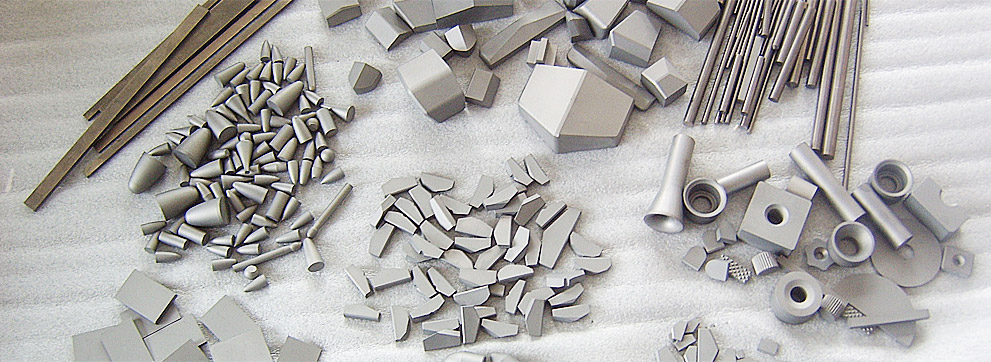
1. Charakterystyka węglika spiekanego:
⑴ Wysoka twardość, odporność na zużycie i czerwona twardość Twardość węglika spiekanego może osiągnąć 86~93HRA w temperaturze pokojowej, co odpowiada 69~81HRC. Może utrzymać wysoką twardość przy 900 ~ 1000 ℃ i ma doskonałą odporność na zużycie. W porównaniu z szybkotnącą stalą narzędziową, prędkość skrawania może być 4~7 razy wyższa, żywotność jest 5~80 razy dłuższa, a twarde materiały o twardości do 50HRC mogą być cięte.
⑵ Wysoka wytrzymałość i moduł sprężystości Wytrzymałość na ściskanie węglika spiekanego wynosi aż 6000 MPa, a moduł sprężystości (4 ~ 7) × 105 MPa, z których oba są wyższe niż w przypadku stali szybkotnącej. Wytrzymałość na zginanie jest jednak niska i wynosi zazwyczaj 1000 ~ 3000 MPa
⑶ Dobra odporność na korozję i utlenianie Ogólnie rzecz biorąc, jest bardzo odporny na korozję atmosferyczną, kwasową, alkaliczną i inne, i nie jest łatwy do utlenienia.
⑷ Mały współczynnik rozszerzalności liniowej Podczas pracy kształt i rozmiar są stabilne.
⑸ Uformowane produkty nie są już przetwarzane ani ponownie szlifowane Ze względu na wysoką twardość i kruchość węglika spiekanego, formowanie i spiekanie w metalurgii proszków nie są już cięte ani ponownie szlifowane. Gdy wymagana jest ponowna obróbka, można zastosować tylko obróbkę elektryczną, taką jak iskra elektryczna, cięcie drutem, szlifowanie elektrolityczne lub specjalne szlifowanie ściernicą. Produkty o określonych specyfikacjach, zwykle wykonane z węglika spiekanego, są lutowane, klejone lub mechanicznie mocowane do korpusu narzędzia lub formy.
2. Powszechnie stosowane węgliki spiekane dzielą się na trzy kategorie w zależności od składu i właściwości użytkowych:
Wolfram-kobalt, węglik tytanu-kobalt, węglik wolframu-tytan-tantal (niob). Najczęściej w produkcji stosowane są spiekane węgliki wolframu-kobaltu i węgliku wolframu-tytanu-kobaltu.
⑴ Węglik spiekany wolframowo-kobaltowy Głównymi składnikami są węglik wolframu (WC) i kobalt. Klasa jest reprezentowana przez kod YG (chińskie inicjały pinyin oznaczające "twardy" i "kobalt"), po którym następuje procentowa zawartość kobaltu. Na przykład YG6 oznacza węglik spiekany wolframowo-kobaltowy o zawartości kobaltu 6%, a zawartość węglika wolframu WC = 1-WCo = 94%.
⑵ Węglik spiekany wolframowo-tytanowo-kobaltowy Głównymi składnikami są węglik wolframu (WC), węglik tytanu (TiC) i kobalt. Klasa jest reprezentowana przez kod YT (chińskie inicjały pinyin "twardy" i "tytan"), po którym następuje procent zawartości węglika tytanu. Na przykład YT15 oznacza węglik spiekany wolframowo-tytanowo-kobaltowy o zawartości węglika tytanu WTiC = 15%.
Węglik spiekany wolframowo-tytanowo-tantalowy (niobowy) Ten rodzaj węglika spiekanego jest również nazywany ogólnym węglikiem spiekanym lub uniwersalnym węglikiem spiekanym. Jego głównymi składnikami są węglik wolframu (WC), węglik tytanu (TiC), węglik tantalu (TaC) lub węglik niobu (NbC) i kobalt. Marka jest reprezentowana przez kod YW (pierwsze chińskie pinyin dwóch znaków "hard" i "wan"), po którym następuje liczba porządkowa.
3. Zalety:
Węglik spiekany charakteryzuje się wysoką twardością, wytrzymałością, odpornością na ścieranie i korozję. Nazywany jest “przemysłowymi zębami” i służy do produkcji narzędzi skrawających, noży, narzędzi kobaltowych oraz części odpornych na zużycie. Jest szeroko stosowany w przemyśle wojskowym, lotnictwie i kosmonautyce, obróbce mechanicznej, metalurgii, wierceniu naftowym, narzędziach górniczych, komunikacji elektronicznej, budownictwie i innych dziedzinach. Wraz z rozwojem przemysłu przetwórczego zapotrzebowanie rynku na węglik spiekany stale rośnie. Ponadto, przyszła produkcja zaawansowanych technologicznie broni i wyposażenia, rozwój najnowocześniejszych nauk i technologii oraz szybki rozwój energii jądrowej znacznie zwiększą zapotrzebowanie na produkty z węglików spiekanych o wysokiej zawartości technologii i wysokiej stabilności jakościowej.
4. FAQ (Najczęściej Zadawane Pytania) dotyczące węglika spiekanego:
(1) Jakie są kluczowe wskaźniki wydajności dla węglika spiekanego? Jak ocenia się jego jakość?
Odpowiedź: Kluczowe wskaźniki wydajności i kryteria oceny jakości przedstawiają się następująco: Główny nacisk kładziony jest na cztery kluczowe wskaźniki — twardość (HRA 82–93,6), gęstość (11,0–15,0 g/cm³, zależnie od składu), wytrzymałość na zginanie i ciągliwość. Ponadto należy kontrolować parametry metalograficzne — takie jak porowatość i zawartość wolnego węgla. Produkt uważany jest za zgodny z normą, jeśli jest wolny od wad wizualnych (takich jak rozwarstwienie, pęknięcia lub zadziory) i spełnia wymagania normy ISO 4489:2019.
(2) W węgliku spiekanym, jak zawartość kobaltu wpływa na wydajność produktu?
Odpowiedź: Kobalt (Co) pełni rolę głównego spoiwa w węglikach spiekanych; jego zawartość bezpośrednio decyduje o równowadze między twardością a wytrzymałością produktu: ① Wyższa zawartość kobaltu (np. 8%–12%) zapewnia lepszą wytrzymałość na uderzenia i większą odporność na uderzenia, choć twardość i odporność na zużycie mogą nieznacznie spaść. Skład ten nadaje się do zastosowań narażonych na uderzenia, takich jak obróbka zgrubna i cięcie przerywane. ② Niższa zawartość kobaltu (np. 3%–6%) zapewnia wyższą twardość i odporność na zużycie, ale skutkuje zmniejszoną wytrzymałością. Skład ten nadaje się do zastosowań wymagających wyjątkowo wysokiej odporności na zużycie, takich jak obróbka wykańczająca i cięcie z dużą prędkością. Konkretny stosunek zawartości kobaltu można dostosować w zależności od konkretnych warunków pracy.
(3) Jakie są właściwości węglika spiekanego pod względem odporności na korozję i odporności na wysokie temperatury? W jakich ekstremalnych środowiskach nadaje się do użytku?
Odpowiedź: ① Odporność na wysokie temperatury: Węglik spiekany zachowuje swoją twardość w wysokich temperaturach od 800°C do 1000°C, znacznie przewyższając możliwości stali szybkotnącej, dzięki czemu nadaje się do zastosowań związanych z obróbką skrawaniem w wysokich temperaturach, metalurgią i podobnymi procesami. ② Odporność na korozję: Odporność na korozję węgliku spiekanego zależy od spoiwa i pierwiastków stopowych; węgliki spiekane na bazie kobaltu oferują umiarkowaną odporność na korozję, podczas gdy węgliki spiekane na bazie niklu oferują doskonałą odporność i nadają się do stosowania w środowiskach korozyjnych, takich jak te występujące w przemyśle chemicznym i morskim. ③ Uwaga: Węglik spiekany nie nadaje się do długotrwałej ekspozycji na wysokie temperatury, silnie utleniające środowiska (np. temperatury powyżej 1000°C w obecności tlenu), ponieważ może to prowadzić do awarii oksydacyjnej.
(4) Jakie są standardy kontroli dla produktów z węglików spiekanych? Które konkretne pozycje są głównie badane?
Odpowiedź: Obecnie krajowe normy są zgodne z normą ISO 4489:2019, Twarde metale — Zasady kontroli i badań. Główne kategorie badań obejmują pięć obszarów: ① Skład chemiczny (zawartość głównego metalu, całkowita zawartość węgla, zawartość tlenu itp.); ② Właściwości fizyczne i mechaniczne (gęstość, twardość, wytrzymałość na zginanie; a w razie potrzeby koercywność, nasycenie magnetyczne, udarność itp.); ③ Struktura metalograficzna (porowatość, wolny węgiel, mikrostruktura itp.); ④ Wymiary (wymiary geometryczne, tolerancje kształtu i położenia itp.); ⑤ Jakość wizualna (brak wad, takich jak rozwarstwienie, pęknięcia, łuszczenie się, zadziory, utlenienie itp.).
Nasza firma znajduje się w pierwszej dziesiątce w Chinach producenci węglików spiekanych. W przypadku zapotrzebowania na produkty z węglika spiekanego, prosimy o skontaktuj się z nami.