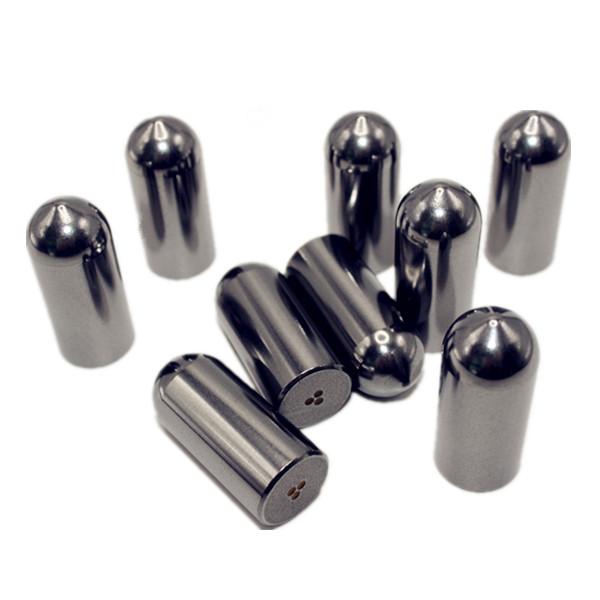
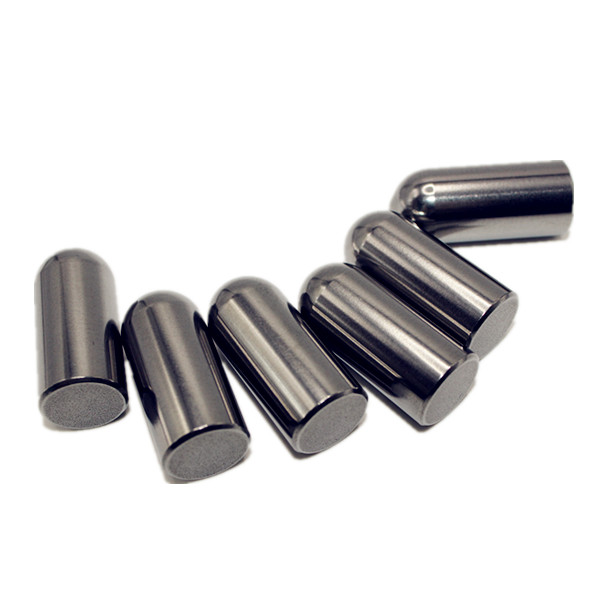
Grade of carbide studs for HPGR :
| Grades | Density (g/cm³) |
Hardness (HRA) |
T.RS (N/mm²) |
Main Application |
| BTD15 | 14 | 86.5 | 2800 | High hardness,high toughness,mainly used for roller press rollers,suitable for cement crushing |
| BTD18 | 13.75 | 85 | 2800 | High hardness,high toughness,mainly used for roller press rollers,suitable for cement crushing |
| BTD20 | 13.5 | 84.5 | 3300 | high toughness,mainly used for roller press rollers,suitable for cement crushing |
HPGR studs sizes:
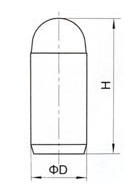
| Type | Basic size(mm) | |
| Diameter(ΦD) | Height(H) | |
| BTSQ1640 | 16.2 | 40 |
| BTSQ1645 | 16.2 | 45 |
| BTSQ1040 | 10.2 | 40 |
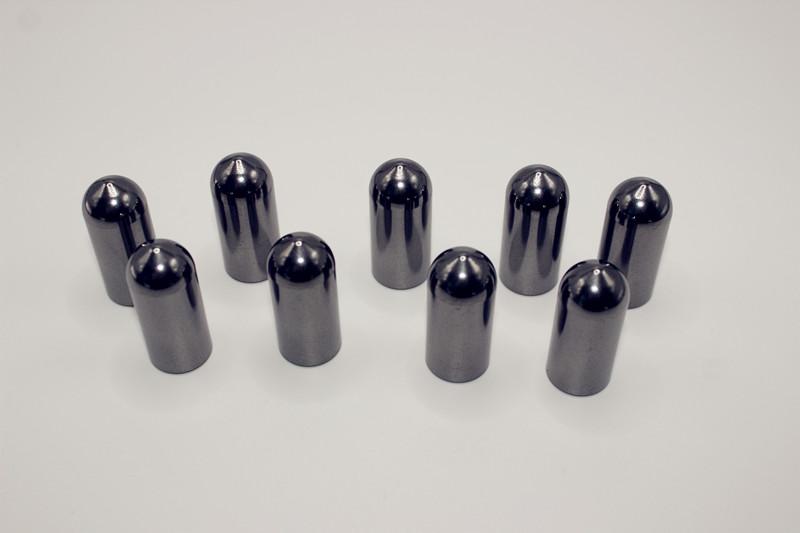
Tungsten carbide studs for HPGR details:
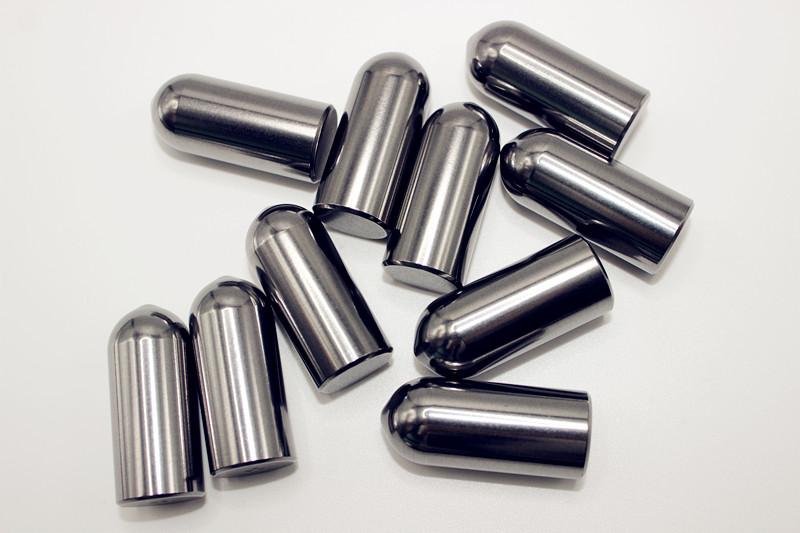
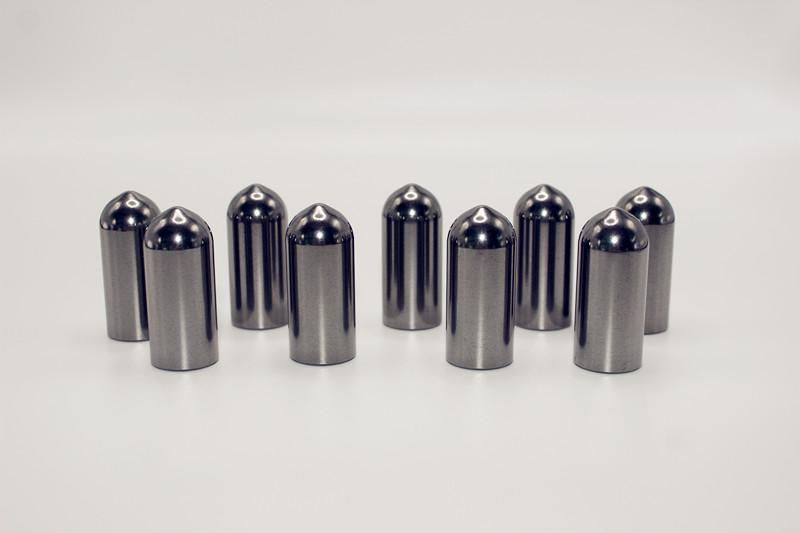
FAQ for HPGR studs.
Q1: What are HPGR studs?
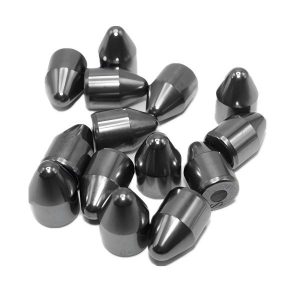
A: HPGR studs are high-strength tungsten carbide pins embedded into the surface of HPGR roller sleeves. Featuring standard domed heads (optional flat tops), they form a stable self-generated autogenous material bed during operation, protecting the roller base from direct abrasion and enabling efficient inter-particle compression crushing for minerals, cement raw meal and limestone.
Q2: What are the advantages of studded rollers over hard faced welded rollers?
A: First, 10 times longer service life under identical working conditions. Second, significantly reduced downtime, as only individual damaged studs require replacement instead of full roller reconditioning. Third, consistent roller gap and uniform product granularity throughout the entire service cycle. Fourth, superior impact and fatigue resistance for harsh feeding conditions.
Q3: What tungsten carbide grades are available for HPGR studs?
A: We supply application-optimized grades aligned with Chinese GB standards:
(1)YG11: High wear resistance for limestone and cement raw meal (low abrasion, extended life).
(2)YG13: Balanced toughness and wear resistance for iron ore and gold ore (medium impact).
(3)YG15/BTD15: High-toughness grade: Maximum impact resistance for heavy-impact sites with oversized rocks and tramp metal.
Ultra-fine grain grade: Premium abrasion resistance for highly abrasive bauxite and hard minerals.
Q4: How do cobalt content and WC grain size affect the wear resistance and strength of HPGR studs?
A: (1) Hardness/Wear Resistance: Lower cobalt content and finer WC grains result in higher hardness and wear resistance; conversely, increasing cobalt content or grain coarsening leads to reduced hardness.
(2) Fracture Toughness: Coarser WC grains result in better fracture toughness.
(3)Transverse Rupture Strength: Coarse-grained material exhibits higher strength when cobalt content is below 12%; however, for grades typically used in cement grinding (where cobalt content exceeds 15%), fine-grained cylindrical inserts demonstrate superior transverse rupture strength compared to coarse-grained ones.
Q5: What is the optimal grade of HPGR studs for high-severity cement raw material processing conditions, and what is the basis for this choice?
A: The preferred choice is YG15 (medium-to-fine grain), followed by YG13. This is based on a 130-day comparative test using the same roller: YG15 fine-grain studs exhibited low wear rates and no cracking or edge chipping, while offering sufficient flexural strength—perfectly balancing wear resistance with toughness. In contrast, YG11 offered the best wear resistance but had low cobalt content and poor impact resistance, making it prone to breakage when processing large material chunks; YG16 and YG18 lacked sufficient wear resistance, and coarse-grain grades showed excessively high failure rates.
Q6: What is the typical service life of HPGR studs?
A: (1)Cement raw meal & limestone: 20,000–30,000 operating hours.
(2)Magnetite & hematite ore: 8,000–12,000 operating hours.
(3)Gold ore & bauxite: 5,000–8,000 operating hours.
Actual service life depends on ore abrasiveness, feed size distribution, roller pressure and tramp iron removal efficiency.
Q7: Do you support customized sizes and grades?
A: Absolutely. As an experienced HPGR studs manufacturer based in China, we offer full customization covering diameter, total length, head shape (domed/flat) and alloy grades, all tailored to each customer’s specific ore types and operating conditions.
Q8: What is the standard lead time?
A: Standard sizes (Φ16, Φ20, Φ25 mm) are in stock with 3–7 days delivery. Custom non-standard studs require 15-20 working days for production.
Please send us inquiries for quotations and free samples for testing: