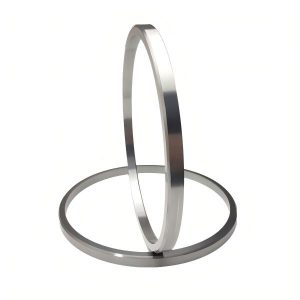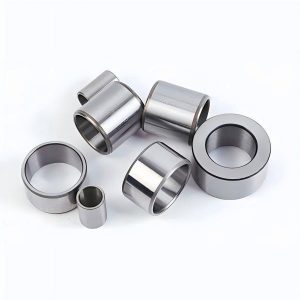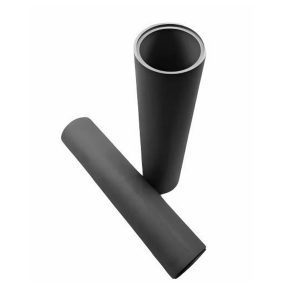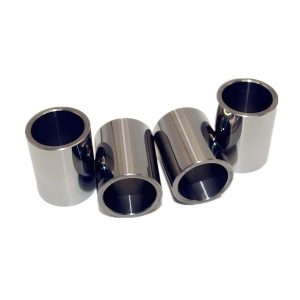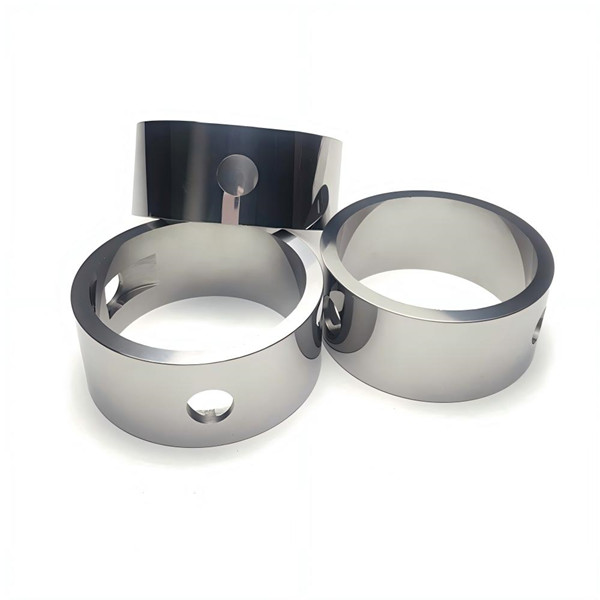
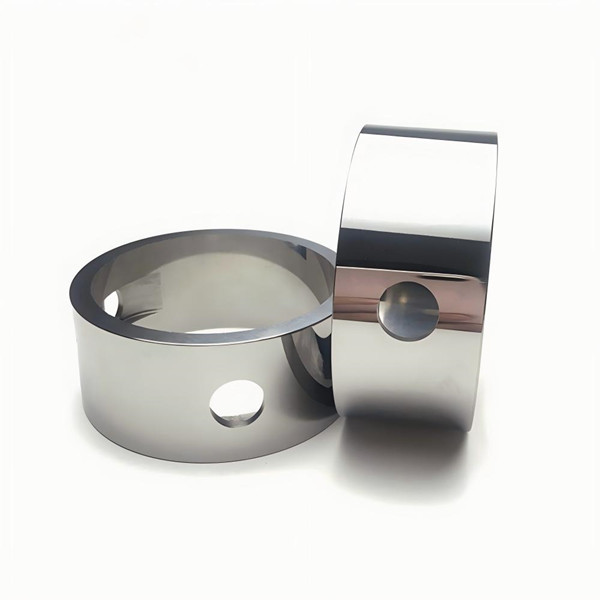
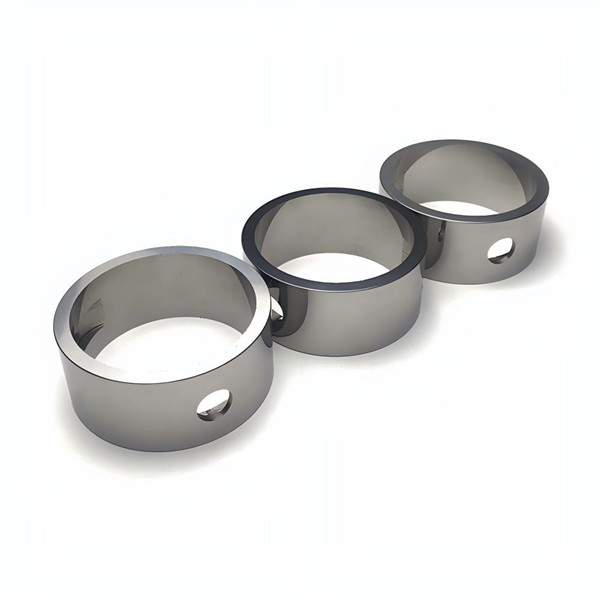
Grades of tungsten carbide bushings:
| Grade | Composition (%) | Density (g/cm3) | Hardness (HRA) | T.R.S (N/mm²) |
| YG6 | 6%co 94%wc | 14.85 | ≥92.5 | ≥2000 |
| YG8 | 8%co 92%wc | 14.7 | ≥89.8 | ≥2800 |
| YG10X | 10%co 90%wc | 14.35 | ≥91.5 | ≥3600 |
| YG11 | 11%co 89%wc | 14.4 | ≥88.5 | ≥2900 |
| YG6 | Fine grain alloy, good wear resistance. It is suitable for making carbide sleeves and tungsten carbide bushings, wear-resistant parts, etc. |
| YG8 | High bending strength, wear resistance lower than YG6. It is suitable for making carbide sleeves and carbide bushings, wear-resistant parts, etc. |
| YG11 |
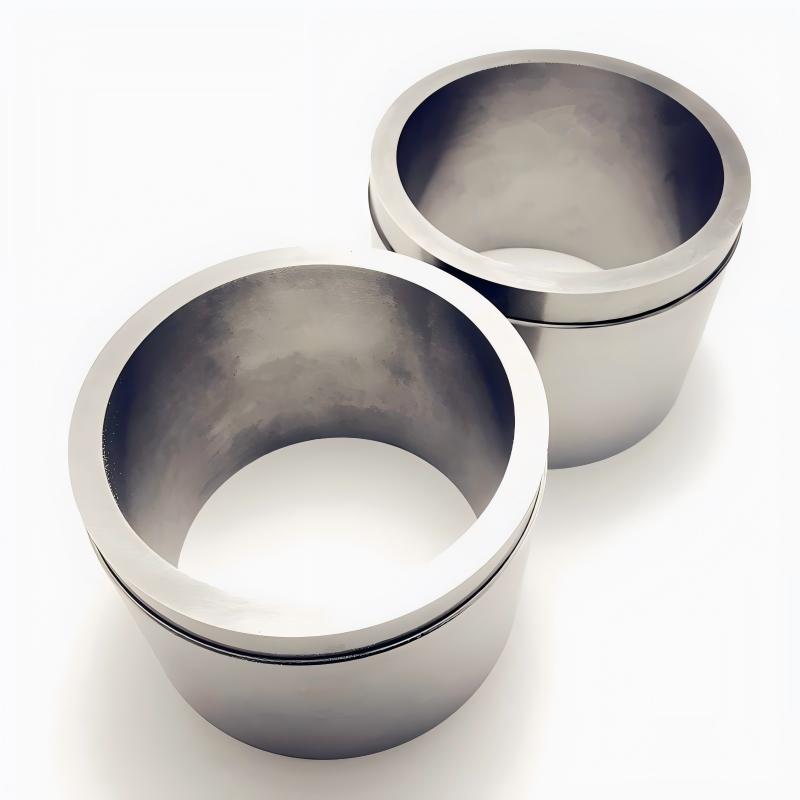
Other types of tungsten carbide bushings:
FAQ for tungsten carbide bushings:
Q1: What are tungsten carbide bushings?
A: Tungsten carbide bushings (also called carbide sleeves, wear bushings or carbide bearing liners) are hollow cylindrical wear-resistant industrial components, classified as a type of plain bearing liner. They are manufactured from sintered tungsten carbide alloys, most commonly in WC-Co (cobalt-bound) grades for maximum abrasion resistance, and WC-Ni (nickel-bound) grades for improved corrosion resistance. They serve as bearing liners, positioning sleeves, valve liners and flow control sleeves to withstand severe abrasion, high bearing pressure, moderate corrosion and medium operating temperatures.
Q2: Are tungsten carbide bushings rust-proof?
A: Standard WC-Co grades resist fresh water, lubricating oil and weak alkaline media, but will corrode when exposed to strong acid. Nickel-bonded WC improves mild corrosion resistance, yet it cannot sustain long-term immersion in seawater or concentrated chemical solvents; anti-corrosion coating is recommended for such harsh media.
Q3: Where are tungsten carbide bushings widely applied?
A: Oil & gas industry: Downhole valve sleeves, pump liner bushings.
Hydraulic & pneumatic equipment: High-pressure valve spool sleeves.
Metal forming: Stamping die guide sleeves, metal extrusion liners.
Wire drawing industry: Drawing die bushings, straightener sleeves.
High-speed precision machinery: Spindle guide sleeves, textile machinery wear parts.
Plastic recycling equipment: Rotor matching carbide bushings for shredders.
Medical & electronic precision instruments: Miniature carbide sleeves.
Q4: What dimensional tolerances can your grinding process achieve?
A: Inner bore (ID): H5, H6, H7 standard fits; precision ground bore tolerance ±0.002~±0.005 mm for mass production; ultra-tight ±0.001 mm lapping is available for small-batch customized precision parts only.
Outer diameter (OD): h5, h6 tolerance bands.
Concentricity: ≤0.002 mm for high-speed rotating matching bushings.
Surface roughness: Ra 0.02–0.2 μm after mirror grinding.
Custom ultra-precision tolerances are acceptable based on drawing requirements.
Q5: Can you produce non-standard customized sizes and structures?
A: Full customization supported. Size range: inner bore 1 mm minimum to outer diameter 800 mm maximum and length up to 1000mm. Available structures include thin-wall, stepped, flanged and eccentric bushings. Customers may provide technical drawings or physical samples for quotation. Multi-hole bushings are rarely applied for liner scenarios and only produced per special customized drawings.
Q6: What is your minimum order quantity?
A: Stock standard-size carbide bushings: 1 piece MOQ.
Custom non-standard carbide bushings: MOQ ranges from 1 to 10 pieces, depending on size, wall thickness and complex structure.
Q7: What are the lead times for stock and customized orders?
A: Ready stock standard carbide bushings: 2–3 working days delivery.
Custom ground finished carbide bushings: 10–25 working days.
Please send us inquiries for quotations and free samples for testing: