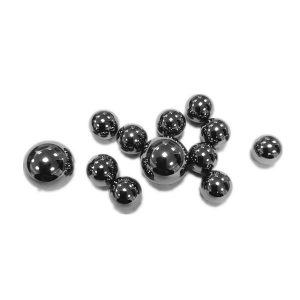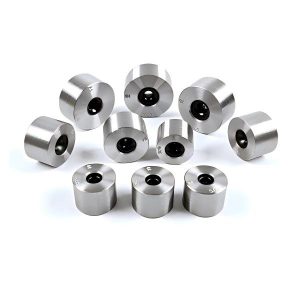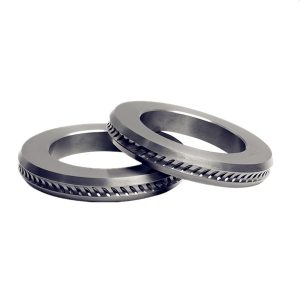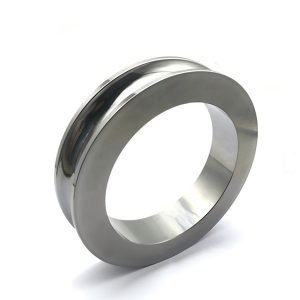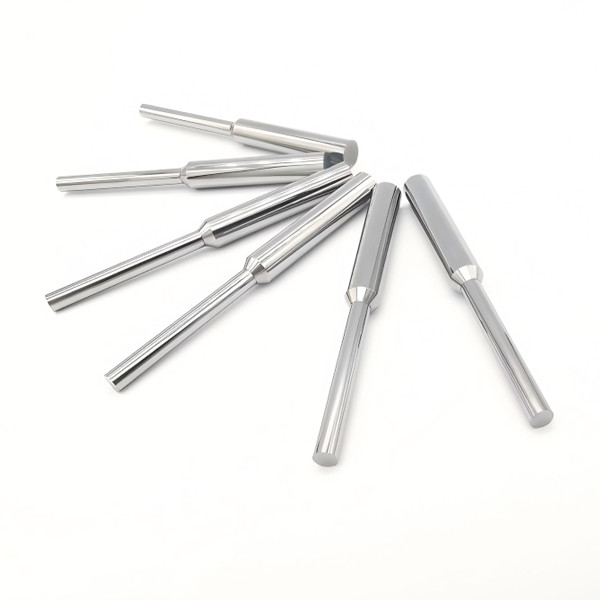
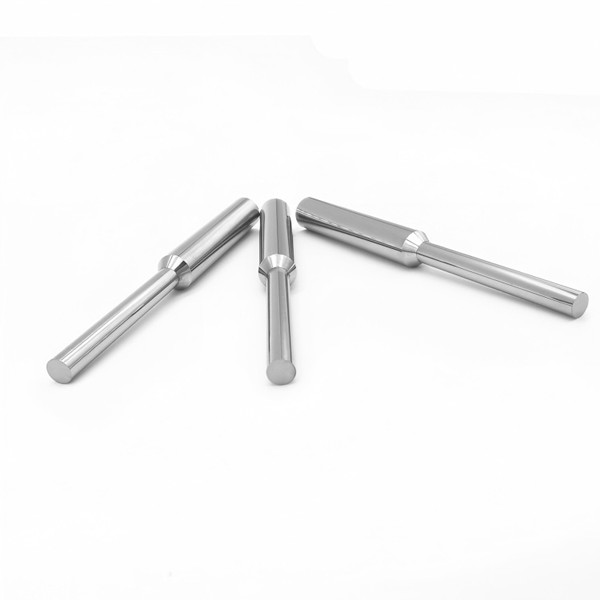
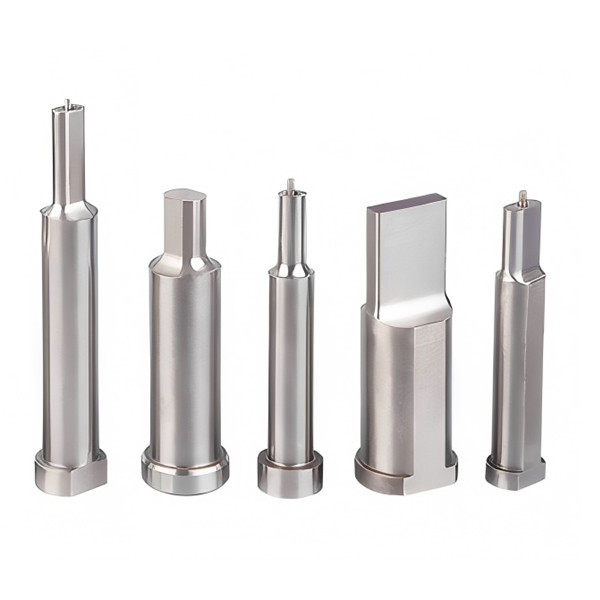
The grades for tungsten carbide punches:
| Grade | WC(%) | Co(%) | Hardness(HRA) | TRS(N/mm²) |
| YG6 | 94 | 6 | ≥90.5 | 1860 |
| YG8 | 92 | 8 | ≥89.5 | 2060 |
| YG11 | 89 | 11 | ≥87.5 | 2100 |
| YG15 | 85 | 15 | ≥87.5 | 2500 |
| YG20 | 80 | 20 | ≥85 | 2600 |
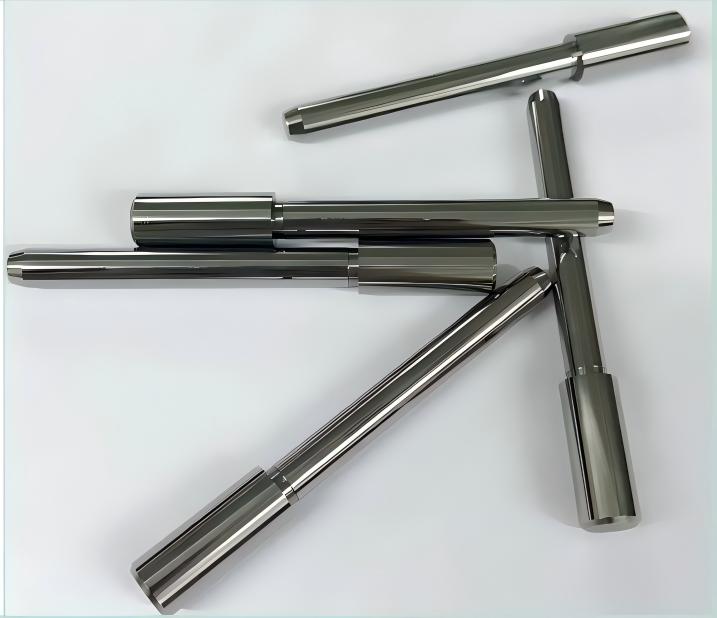
Tungsten carbide punches details:
FAQ for tungsten carbide punches:
Q1: What are tungsten carbide punches:
A: Tungsten carbide punches (carbide punches) are precision stamping and piercing tools manufactured from cemented tungsten carbide (WC-Co alloy). They replace high-speed steel (HSS) punches for high-volume processing of hard workpieces, featuring outstanding hardness, wear resistance, and compressive strength.
Q2: What dimensional tolerances can tungsten carbide punches achieve?
A: Diameter tolerance: ±0.001 mm ~ ±0.003 mm for precision electronic micro punches; ±0.005 mm ~ ±0.01 mm for general stamping punches.
Length tolerance: ±0.005 mm ~ ±0.02 mm.
Surface roughness: Ra 0.02–0.1 μm after ultra-fine grinding and mirror polishing.
Concentricity: ≤0.002 mm for micro tiny punches (0.1–1.0 mm diameter); ≤0.003–0.005 mm for standard stepped punches; perpendicularity ≤0.003 mm.
Q3: What surface treatments are available for tungsten carbide punches?
A: Super mirror polishing: Reduce friction and prevent material adhesion, ideal for aluminum and copper stamping.
PVD coating (TiN / TiCN / TiAlN): Improve surface hardness, anti-wear and anti-sticking performance, extending service life by 2–4 times.
DLC diamond coating: For non-ferrous metal, plastic and ultra-thin foil; ultra-low friction coefficient.
Cryogenic treatment (-196℃): Release residual internal grinding stress to boost toughness and lower edge chipping risk.
Q4: Can custom special-shaped punches be manufactured?
A: Yes. We produce standard straight punches, stepped shoulder punches, ejector punches, oval/rectangular/profile forming punches, micro tiny punches (minimum diameter 1mm), slender long punches and cold forging punches. Customers need to provide 2D/3D drawings or physical samples for customization.
Q5: What carbide grades are commonly used for carbide punches?
A: Low Cobalt (3%–6% Co): High hardness (HRA > 91) and excellent wear resistance; suitable for fine blanking of ultra-thin stainless steel, silicon steel sheets, and electronic lead frames; however, the material is relatively brittle and unsuitable for heavy-impact applications.
Medium Cobalt (8%–10% Co): A general-purpose grade offering the best balance of hardness and toughness; suitable for copper, brass, cold-rolled steel, and standard stamping dies.
Medium-High Cobalt (10%–12% Co): High toughness; suitable for applications involving moderate impact, such as stamping dies.
High Cobalt (15%–20% Co): Excellent impact resistance; specifically designed for high-impact applications such as blanking thick plates, heavy-duty punching, and cold forging punches.
Q6: What workpieces are carbide punches suitable for?
A: Thin metal sheets: Cold rolled steel, stainless steel, copper, brass, aluminum alloy, silicon steel sheet.
Electronic components: Lead frames, terminals, connectors, IC pins, battery tab piercing.
Hardware stamping: Rivets, screw blanks, spring plates, precision gaskets.
Other applications: PCB punching, ceramic sheet, graphite and plastic film piercing.
Q7: What’s your MOQ for standard / custom tungsten carbide punches?
A: Standard stock sizes: small MOQ, sample order acceptable (1–2 pcs for testing). Non-standard customized shapes require higher MOQ to cover mold & sintering cost. Please send us inquiries for further information.
Q8: What’s your production lead time?
A: Stock ground tungsten carbide punches: 2–3 working days.
Standard custom carbide punches: 10–25 days.
Please send us inquiries for quotations and free samples for testing: