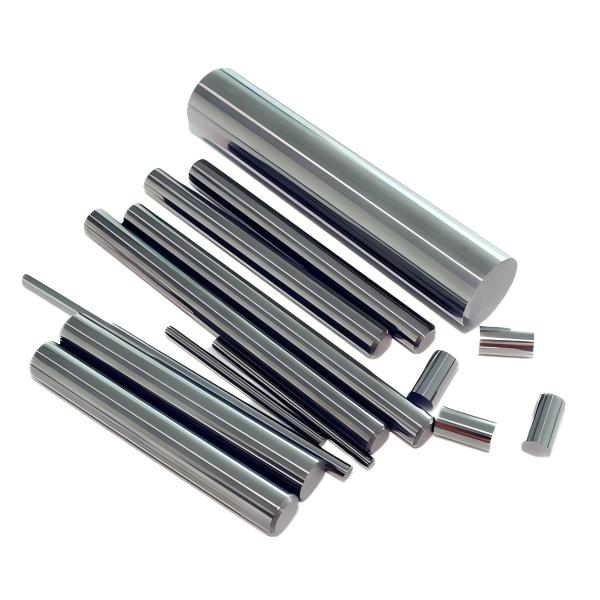
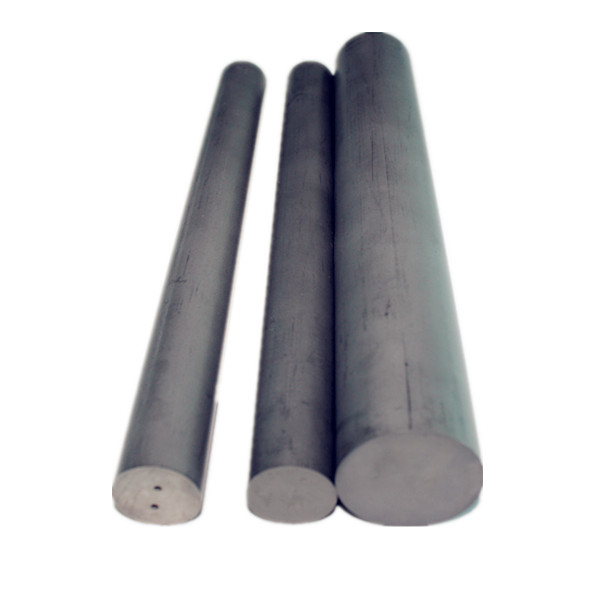
1. Solid carbide rods grades:
| Grade | ISO Grade | WC (%) |
Co (%) |
Grain Size (μm) |
Hardness (HRA) |
Density (g/cm³) |
TRS (N/mm²) |
| BU06 | K05 – K10 | 94 | 6 | 0.5 | 94 | 14.75 | 3600 |
| BU09 | K20 – K30 | 91 | 9 | 0.4 | 94 | 14.4 | 3800 |
| YG10X | K20 – K30 | 90 | 10 | 0.8 | 91.5 | 14.35 | 3600 |
| BT15 | K20 – K30 | 90 | 10 | 0.7 | 92.2 | 14.35 | 3900 |
| BT20 | K20 – K30 | 90 | 10 | 0.6 | 92.3 | 14.4 | 4000 |
| BT25 | K30 – K40 | 88 | 12 | 0.6 | 92.5 | 14.1 | 4000 |
| BT25UF | K30 – K40 | 88 | 12 | 0.4 | 92.8 | 14.05 | 4200 |
Grade BU06: This grade is suitable for machining aluminum magnesium alloy, graphite, plastic, wood and composite material, etc.
Grade BU09: This grade is suitable for machining alloy steel, stainless steel, aluminum alloy, chilled hardened steel and titanium alloy, etc. It can process materials with hardness up to HRC 65.
Grade YG10X: This grade is suitable for machining materials such as common steel, non-ferrous metals, and cast iron, etc. It can process materials with hardness up to HRC 45. This grade is is popular in the Asian market, especially the Indian market.
Grade BT15: This grade is suitable for machining common steel, cast iron, stainless steel, heat-resistant steel, chilled hardened steel, nickel base alloy and titanium alloy, etc. It can process materials with hardness up to HRC 55. This grade is popular in the European market, especially in German market. Other markets, such as the USA, Canada, Korea, etc.
Grade BT20: This grade is suitable for machining stainless steel, heat-resistant steel, chilled hardened steel, cast iron, nickel base alloy and titanium alloy, etc. It can process materials with hardness up to HRC 55.
Grade BT25: This grade is suitable for machining alloy steel, titanium alloy, chilled hardened steel cast iron, aluminum alloy, etc. It can process materials with hardness up to HRC 60.
Grade BT25UF: This grade is suitable for machining alloy steel, stainless steel, aluminum alloy, chilled hardened steel and titanium alloy, etc. It can process materials with hardness up to HRC 62.
2. Solid carbide rods sizes:
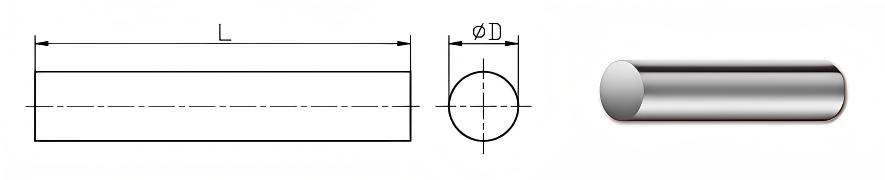
| OD(MM) | Length(MM) |
| 1-50 | 10-330 |
3. Solid carbide rod surface condition:
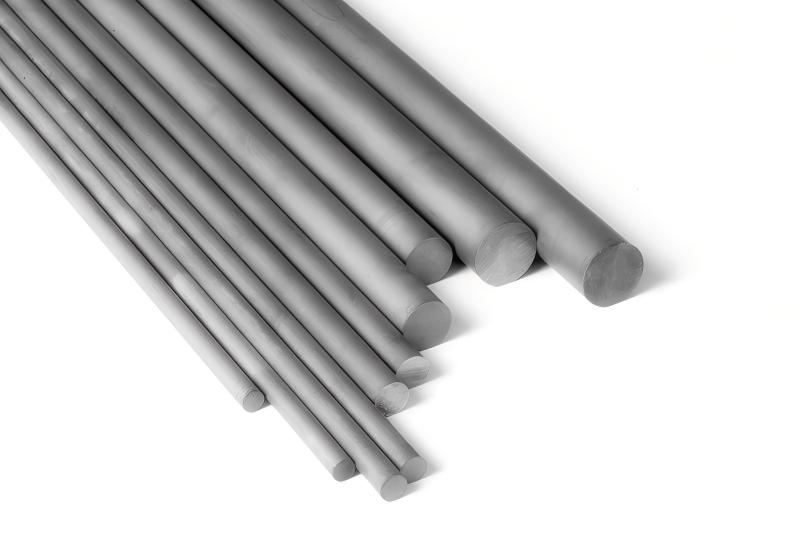
Sintered sand blasting surface:
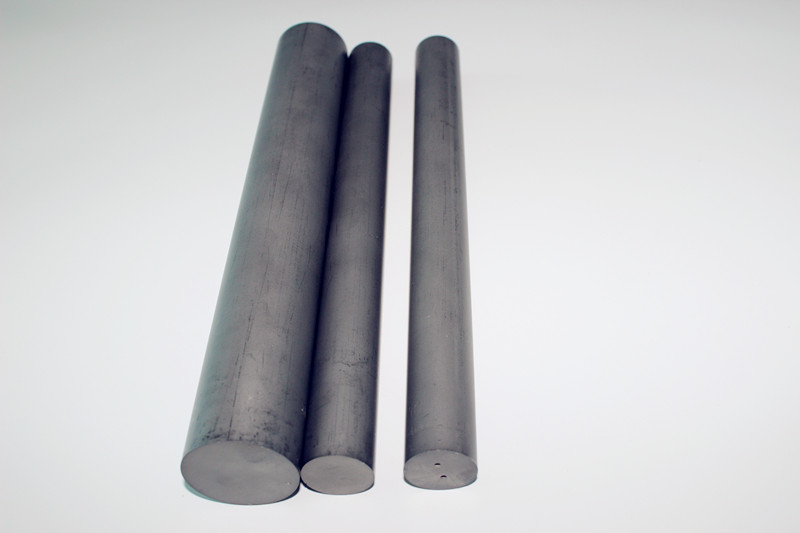
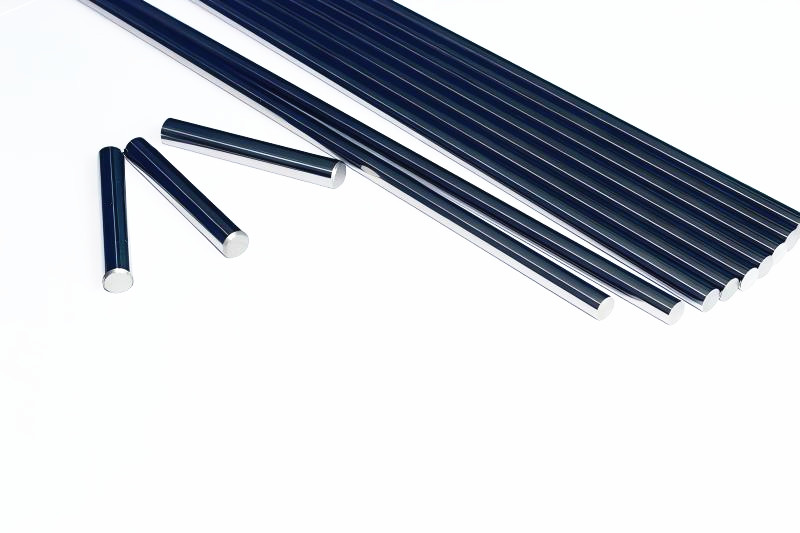
Ground and polished surface h5 and h6:
FAQ for solid carbide rods:
Q1: What are solid carbide rods?
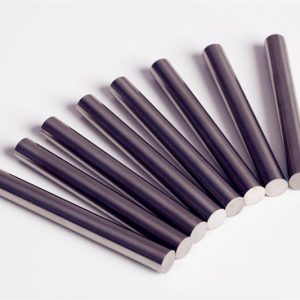
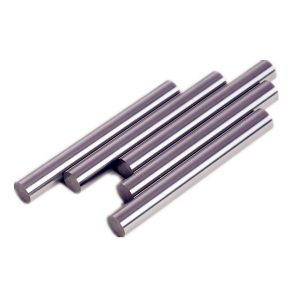
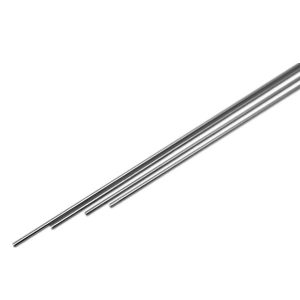
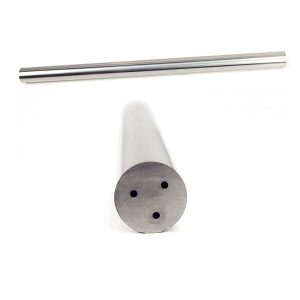
A: Solid carbide rods, also called tungsten carbide rods or solid carbide round blanks, are high-performance powder metallurgy blanks manufactured from tungsten carbide (WC) powder bonded with cobalt (Co) via pressing and vacuum sintering. As a standard tool and wear-part stock material, they are widely used to produce solid end mills, drills, reamers, micro cutters, ejector pins and precision mold components. Unlike steel-body carbide tools, the entire rod is made of 100% WC-Co alloy without a steel substrate.
Q2: What are solid carbide rods used for?
A: Cutting tool blanks: End mills, drills, taps, reamers, PCB micro drills, engraving cutters and micro precision tools.
Wear & mold components: Ejector pins, nozzles, seal pins, punches, core pins, wear bushings and precision gauges.
They are standard stock for mold manufacturing, automotive, aerospace, medical device, 3C electronics and general precision machining industries.
Q3: What is the difference between sintered carbide blank and ground carbide rod?
A: As-sintered carbide blank: Unprocessed after sintering, with a rough sintered skin, loose dimensional tolerance and lower unit cost. Requires full in-house grinding before use.
Ground carbide rod: Processed via double-pass centerless grinding, with controlled outer diameter tolerance, smooth surface and sintered skin removed. It is ready for direct fluting and tool manufacturing, saving internal grinding time for tool makers.
Q4: Are your solid carbide rods cryogenically treated?
A: Yes, all our solid carbide rods undergo a standardized deep cryogenic treatment as a mandatory factory process, with no extra charge for standard specifications.
This controlled deep-freeze procedure relieves residual sintering stress, stabilizes the cobalt binder phase and homogenizes the tungsten carbide microstructure. It effectively reduces the risk of microcracking, edge chipping and breakage during tool grinding, fluting and heavy-duty machining.
The treatment also improves wear resistance and long-term dimensional stability, extending the service life of finished carbide tools including end mills, drills, reamers and precision wear parts. Custom treatment parameters for special grades are available on request.
Q5: Do you support non-standard custom specifications?
A: Absolutely. As an experienced manufacturer of solid carbide rods, we offer full one-stop customization services, including special outer diameters, custom lengths, flat surfaces, and step rods. You can send us your technical drawings for an accurate quotation and tailored production planning.
Q6: What is your minimum order quantity (MOQ) for solid carbide rods ?
A: Orders for standard in-stock carbide rods start from 1 kg with no strict MOQ. For custom non-standard sizes and special grades, the MOQ ranges from 1 kg to 5 kg, subject to the exact specification.
Q7: What is your lead time?
A: In-stock items can be shipped within 2–3 days. New non-standard customized orders take 7–15 working days, subject to processing complexity.
Please send us inquiries for quotations and free samples for testing: