
C8 Carbide
I. Definition of C8 Carbide
C8 Carbide is a grade specifically designed for steel finishing within the US ANSI C-series carbide classification system. It belongs to the C5–C8 alloy family intended for ferrous metal machining and represents the highest-grade finishing material in this series. Unlike the C1–C4 series—which are tungsten-cobalt (WC-Co) alloys suited for cast iron and non-ferrous metals—the C5–C8 series consists of carbides specifically engineered for steel machining through the addition of TiC/TaC composite carbides. These grades are developed expressly for cutting materials such as carbon steel and alloy steel. C8 is primarily positioned for high-speed, continuous, and precision steel finishing and is a classic, traditional finishing material in the North American machinery manufacturing industry. Based on a tungsten carbide (WC) matrix with a cobalt (Co) binder and composite additions of cubic carbides (such as TiC and TaC), this alloy effectively mitigates common challenges associated with high-speed steel cutting—namely built-up edge (BGE) formation, crater wear, and insufficient high-temperature hardness. It is widely used in the fields of standard cutting tools and precision wear-resistant components.
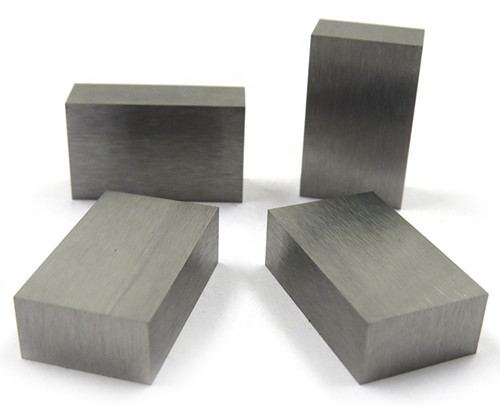
II. Chemical Composition and Key Properties
1. Typical Composition Ratios: While formulations vary slightly among manufacturers, the following represents the typical industry range: Tungsten Carbide (WC) 62%–68%, Cobalt (Co) 6%–8%, Titanium Carbide (TiC) 15%–20%, and Tantalum Carbide (TaC) 5%–8%. The total content of TiC and TaC composite carbides is approximately 20%–28%, forming the fundamental basis for C8’s high-temperature resistance and resistance to diffusion wear; the sum of all components in an actual formulation is 100%, with TiC and TaC contents often inversely balanced. The combination of low cobalt and high cubic carbide content dictates the material’s fundamental characteristics: high hardness and low toughness.
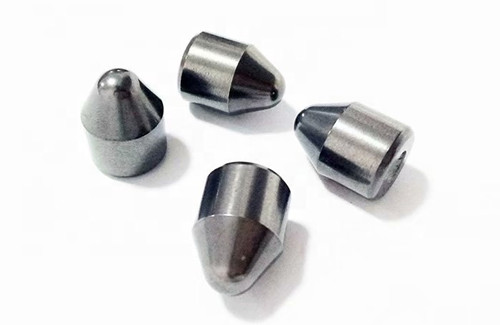
2. Physical and Mechanical Properties: Overall, C8 exhibits high hardness, high wear resistance, and high thermal stability, alongside low impact resistance. Its room-temperature hardness is HRA 92–93; density ranges from 11.0 to 12.5 g/cm³; transverse rupture strength is 1400–1600 MPa; and tensile strength is approximately 1000–1300 MPa. It exhibits excellent retention of hardness at high temperatures (high hot hardness) and superior high-temperature chemical stability; it resists thermal deformation, softening, and failure during high-speed cutting, maintaining cutting-edge dimensional accuracy over extended periods. Compared to lower-grade designations like C6 and C7, C8 contains a higher proportion of cubic carbides, offering significantly improved resistance to crater wear and adhesive wear at high temperatures, thereby permitting higher cutting speeds.
3. Cutting Performance and Limitations: TiC effectively inhibits solid-state diffusion reactions between the tool and the steel, reduces built-up edge (BUE) formation, and minimizes scratches and burrs on finished surfaces; TaC enhances high-temperature strength and thermal stability, resisting thermal wear during high-speed cutting and ensuring the required workpiece surface roughness. Its limitations stem from low cobalt content, resulting in insufficient toughness and poor impact and vibration resistance; it cannot withstand conditions involving deep cuts, high feed rates, interrupted milling, or heavy-load impacts, and is highly prone to edge chipping or fracture when used for rough machining.
III. Main Applications
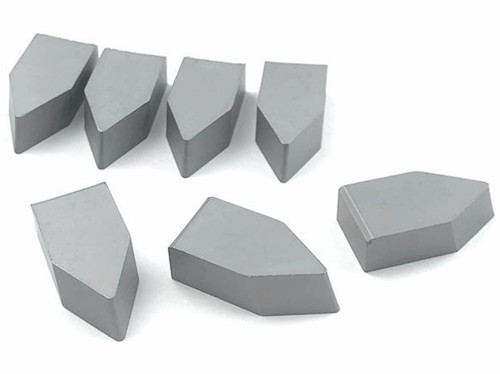
It is ideally suited for stable, continuous, and impact-free precision finishing operations on steel. It is primarily used for high-speed precision turning, boring, reaming, and thread finishing of carbon steels, alloy structural steels, and quenched-and-tempered steels, often serving as the final machining step for high-precision components such as precision shafts and hydraulic sleeves.
It can also be used to manufacture precision wear-resistant parts, small forming molds, and wear-resistant ejector pins for low-impact applications. Usage parameters are strict: it is strictly prohibited for machining cast iron, aluminum alloys, copper, and other non-ferrous metals, and is unsuitable for rough machining, interrupted milling, or other impact-prone conditions. Welding performance is moderate; strict temperature control and slow cooling are required to prevent cracking.
IV. Approximate Benchmark Grades
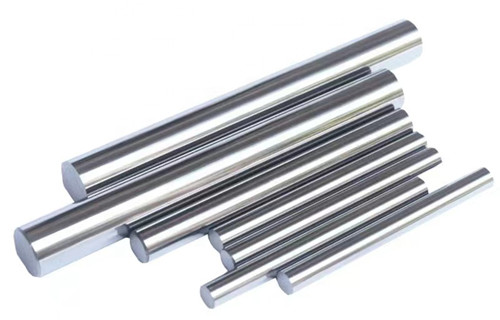
C8 is a grade defined by the US ANSI standard; while there are no exact equivalents domestically or internationally, it can be benchmarked based on performance and application scenarios. Under the ISO standard, C8 most closely aligns with P01 and P05 grades (designed for super-precision and precision finishing) and belongs to the P-class carbide category dedicated to steel machining. Domestically, the YT30 grade is a close match to C8; both are steel-finishing materials characterized by high cubic carbide content and low toughness, making them interchangeable in continuous precision finishing operations. Common pitfalls in grade selection must be avoided: Many practitioners mistakenly equate YG8 with C8, yet the two are fundamentally different. YG8 is a K-class tungsten-cobalt alloy containing no TiC or TaC; while it offers relatively good toughness and suits the machining of cast iron, non-metallic materials, and non-ferrous metals, it is prone to severe crater wear during high-speed steel finishing and cannot serve as a substitute for C8. Furthermore, while C7 corresponds to ISO P10, C8 offers superior wear and heat resistance—albeit with lower toughness—making it suitable only for ultra-precision finishing operations.
V. Conclusion
US-grade C8 carbide is a specialized cemented carbide designed specifically for steel finishing; it excels in high-temperature wear resistance and resistance to diffusion wear, making it a classic material long favored in North American manufacturing. Its characteristics are distinct: while it offers outstanding wear and heat resistance, it has poor impact and vibration resistance, requiring strict adherence to specific operating conditions. Selection should leverage its strengths while avoiding its weaknesses; it should be used exclusively for continuous, stable steel finishing with low feed rates, avoiding applications involving impact or heavy loads. For domestic substitution, YT30 is a suitable candidate for initial testing. In an era dominated by coated tools, uncoated C8 retains irreplaceable value in ultra-precision finishing applications thanks to its exceptional edge sharpness.
Our company is among China’s top ten tungsten carbide manufacturers. Should you require cemented carbide products, please contact us.