
C5 Carbide and and Its Applications
I. What is C5 carbide?
C5 carbide is a classic grade within the ANSI (American National Standards Institute) carbide classification system, developed specifically as a general-purpose material for machining steel. Established in the mid-20th century, the ANSI system categorizes carbides into two main series based on the workpiece material and operating conditions: grades C1 through C4 are tungsten-cobalt (WC-Co) grades primarily designed for machining cast iron, non-ferrous metals, and non-metallic materials; grades C5 through C8 are alloyed grades designed for machining steel, featuring compositional adjustments to inhibit crater wear during the cutting process. C5 is positioned as a grade for rough machining steel, offering a balance between toughness and wear resistance, and stands as one of the most widely used rough-machining carbide grades in the Western machining industry.
| WC | CO | TiC | TaC | Grain size (μm) | Hardness(HRA) | Density(g/cm³) | TRS (N/mm²) |
| 78%-87% | 5.5%–11.5% | 3%–7% | 5%–14% | 1.0 -3.0 | 89.7–91.5 | 12.3–13.5 | 1655–2275 |
II. Chemical composition of C5 carbide
The ANSI classification system is application-oriented rather than based on mandatory compositional standards; consequently, while the specific formulations of C5 grades vary among manufacturers, the underlying compositional logic remains consistent.
A typical C5 carbide utilizes tungsten carbide (WC) as the hard matrix—accounting for approximately 78%–87% of the composition—which provides the material’s hardness and wear resistance. Cobalt (Co) serves as the binder phase (5.5%–11.5%), determining the material’s fundamental toughness. Additionally, the composition includes 3%–7% titanium carbide (TiC) and a combined 5%–14% of tantalum carbide (TaC) and niobium carbide (NbC); these cubic carbides are typically used in combination and are crucial for making C5 suitable for steel machining. Steel cutting temperatures can reach 800–1200°C; at these high temperatures, WC tends to diffuse into the steel chips, causing crater wear. In contrast, TiC, TaC, and NbC offer superior chemical stability, effectively inhibiting diffusion wear while refining grain structure and balancing high-temperature performance with toughness, thereby extending the tool’s service life at high temperatures. Comparison of C5 Carbide with Domestic Grades
In terms of international standards, C5 carbide generally corresponds to the ISO P30–P40 grades (intended for rough machining of steel), with some general-purpose formulations also covering the M30 grade.
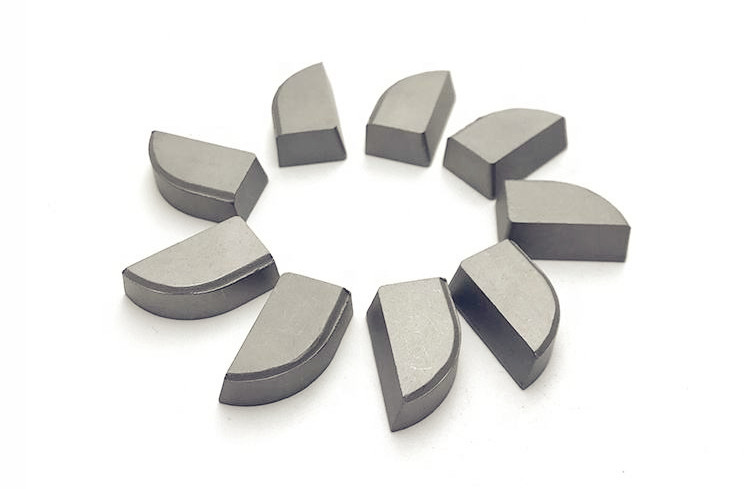
When compared to domestic Chinese carbide grades, approximate equivalents can be identified from two perspectives: First, regarding application, the domestic YT5 grade (a tungsten-cobalt-titanium carbide) is positioned similarly to C5; both are primarily designed for the rough machining of carbon steel and alloy steel, offering outstanding impact toughness and suitability for operations involving large depths of cut and high feed rates. However, their compositional systems differ: standard YT5 is a WC-TiC-Co ternary system that lacks TaC/NbC components, resulting in lower high-temperature wear resistance compared to C5. Second, regarding composition, the domestic YW2 grade (a general-purpose tungsten-titanium-tantalum-cobalt carbide) is closer to C5; it incorporates tantalum carbide/niobium carbide, making it suitable not only for rough machining steel but also for the interrupted cutting of cast iron and non-ferrous metals. While YW2 offers a broader application range, its transverse rupture strength is lower than that of C5, and there is a disparity in impact resistance. It should be noted that cross-brand grade comparisons represent only approximate functional equivalents rather than exact one-to-one matches; actual selection requires verification based on specific operating conditions and manufacturer specifications.
III. Core Properties of C5 Carbide
Typical specifications for C5 carbide include a Rockwell hardness of 89.7–91.5 HRA (where higher cobalt content results in lower hardness and higher toughness), a transverse rupture strength of approximately 1655–2275 MPa, and a density of approximately 12.3–13.5 g/cm³, with a predominantly medium grain size. It offers three key performance advantages: first, excellent resistance to crater wear—the addition of cubic carbides effectively inhibits the high-temperature diffusion reaction between tungsten carbide (WC) and steel chips, significantly extending tool life during steel machining; second, good impact toughness—an optimized cobalt content prevents edge chipping or breakage during interrupted cutting or when machining workpieces with oxide scale; and third, balanced overall performance—striking a balance between the high hardness/low toughness of finishing grades and the low hardness/high toughness of heavy-impact grades, making it highly versatile and suitable for the vast majority of conventional steel roughing applications.
IV. Applications and Recommended Use Cases for C5 Carbide
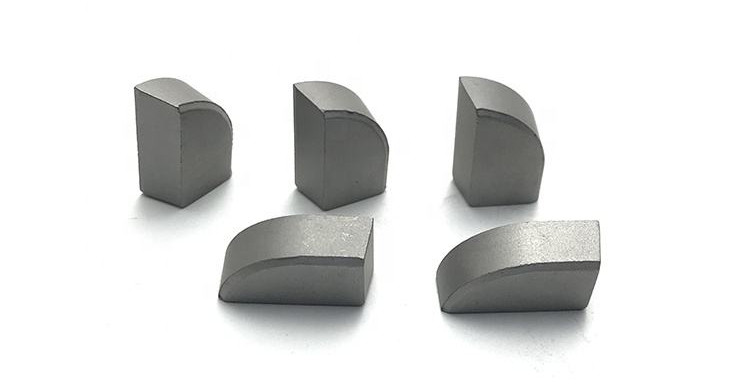
C5 cemented carbide is primarily used for rough machining operations on various types of steel. Recommended applications fall into four main categories:
First, rough turning, milling, and planing of ordinary carbon steel and low-alloy steel; it is particularly well-suited for high-efficiency roughing operations involving large depths of cut and high feed rates, balancing machining efficiency with tool life. Second, interrupted cutting conditions, such as machining steel surfaces with notches or casting scale, as well as non-continuous cutting operations like milling and slotting. Third, mixed-application environments in general machine shops, where it can handle the rough machining needs of both steel and some gray cast iron components, thereby reducing the costs associated with switching between tool grades. Fourth, mass rough machining of automotive parts and structural components for construction machinery, offering stable performance and consistent batch quality. This grade is not recommended for high-precision finishing, machining of high-hardness hardened steel, or high-speed finishing operations.
V. Summary of C5 carbide
Overall, as a classic general-purpose roughing grade within the US ANSI system, C5 enjoys widespread recognition in the global metalworking industry thanks to its balanced performance and mature application history. In the context of domestic manufacturing, YT5 and YW2 serve as viable functional alternatives, offering excellent cost-performance ratios for steel roughing applications.
Our company is among China’s top ten tungsten carbide manufacturers. Should you require cemented carbide products, please contact us.