
C3 carbide
C3 carbide is an American-standard, extra fine-grained tungsten-cobalt (WC-Co) cemented carbide. It corresponds to the ISO K10 classification and closely mirrors the performance characteristics of the Chinese-standard YG6X grade; consequently, it is widely utilized in precision industrial applications throughout the United States. Its core strengths lie in its exceptional hardness and high wear resistance, while also maintaining robust corrosion resistance and flexural strength, making it ideally suited for high-precision scenarios such as precision machining and mold manufacturing. Chemical Composition: WC 93%-94%, Co 6%-7%, with trace amounts of TaC/NbC (≤0.6%). Key Parameters: Density of 14.70–14.85 g/cm³, Hardness of 91.5–92.5 HRA, and Flexural Strength of 1800–2400 MPa. Manufactured using an extra fine grain, high-temperature sintering process, the material features a dense, defect-free microstructure. Its wear resistance is on par with that of YG6X, while its impact toughness is slightly lower than that of medium-grained carbides, thereby serving as a complementary alternative to YG6X.
This material maintains uniform hardness—both internally and externally—without the need for post-processing heat treatment, making it highly suitable for mass production environments. Its primary applications are concentrated in three key sectors: precision molds, cemented carbide cutting tools, and wear-resistant components. It is commonly used to manufacture products such as wire-drawing dies and turning tools, enabling the machining of a wide variety of materials; its application scenarios largely overlap with those of YG6X.
| WC | Co | Grain size (μm) | Hardness(HRA) | Density(g/cm³) | TRS (N/mm²) |
| 94% | 6% | 0.5-0.8 | 91.5-92.5 | 14.8-15.0 | 2500 |
I. Introduction to C3 Carbide
C3 carbide is a extra fine-grained tungsten-cobalt cemented carbide, formulated under American standards and specifically optimized for precision machining applications. Its core constituents are WC (93%-94%) and Co (6%-7%), supplemented by trace amounts of TaC/NbC, which serve to refine the grain structure and enhance high-temperature wear stability. With a grain size ranging from 0.3 to 0.9 μm, it exhibits exceptional hardness and wear resistance, alongside excellent corrosion resistance, flexural strength, and weldability. Tools made from this material are highly resistant to fracture during high-frequency brazing operations, and their cutting edges can be ground to an ultra-fine surface finish of Ra 0.06 μm, resulting in extremely high surface quality during machining—characteristics that align fundamentally with the core attributes of the YG6X grade. As a premium mold-making material, C3 carbide ensures uniform internal and external hardness without the need for heat treatment, making it highly suitable for mass production. It is primarily utilized in the fabrication of cold-heading dies, cold-stamping dies, and cold-pressing dies for standard parts, bearings, and similar components. Additionally, it can be used to manufacture highly wear-resistant tungsten carbide parts and precision machining tools, excelling in high-speed finishing and semi-finishing applications. In American industry, it serves as a commonly used substitute for the YG6X grade.
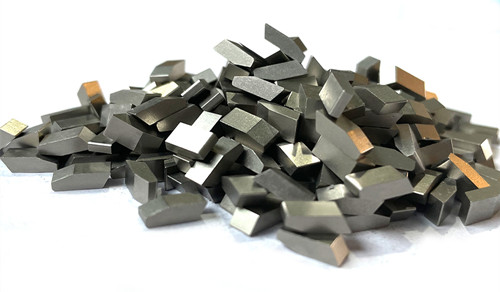
II. Chemical Composition
The chemical composition of C3 carbide (based on typical values from U.S. industrial standards, expressed as mass fractions) is precisely controlled, with the core constituents detailed as follows:
- Tungsten Carbide (WC): 93%–94%. Acting as the hard phase, WC determines the material’s hardness and wear resistance; the presence of extra fine grains further enhances its wear-resistant properties. The WC content is essentially identical to that of YG6X, which is the primary reason for the close performance characteristics of the two grades.
- Cobalt (Co): 6%–7%. Serving as the binder phase, Co bonds the WC particles together while imparting toughness and strength to the material. The Co content in C3 carbide is slightly higher than that of YG6X, resulting in a marginal improvement in impact toughness.
- TaC/NbC: ≤0.6%. These are added in trace amounts to refine the grain structure, inhibit the growth of WC particles, and enhance high-temperature hardness and wear stability. The addition levels are essentially on par with those found in YG6X.
III. Physical and Mechanical Properties
The physical and mechanical properties of C3 carbide closely mirror those of YG6X, surpassing those of standard medium-grain tungsten-cobalt alloys. Typical values based on U.S. industrial standards are as follows:
- Density:14.70–14.85 g/cm³ (typical value: 14.8 g/cm³). The material exhibits uniform density with no discernible porosity, and its density range essentially overlaps with that of YG6X.
- Hardness:91.5–92.5 HRA (approx. 79–81 HRC). This level of hardness is essentially on par with that of YG6X, offering comparable wear resistance and meeting the requirements for high-precision machining applications.
- Transverse Rupture Strength (Bending Strength):** 1800–2400 MPa. Due to a slightly higher cobalt (Co) content, this property is marginally superior to that of YG6X, satisfying the demands of precision machining and mold/die applications.
- Grain Size: 0.5–0.8 μm. Classified within the extra fine grain category, the grain size is slightly larger than that of YG6X yet still ensures excellent wear resistance.
- Other Properties: Compressive Strength: 2900–3100 MPa; Elastic Modulus: 590–610 GPa; Thermal Conductivity: 78–98 W/(m·K); Coefficient of Linear Thermal Expansion: approx. 5.1 × 10⁻⁶/K. The material exhibits excellent resistance to thermal fatigue; it is highly resistant to chipping or cracking under thermal cycling conditions and aligns closely with the performance specifications of YG6X.
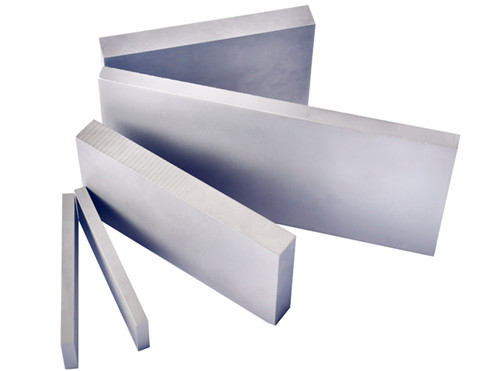
IV. Application Fields
The application scope of C3 carbide overlaps significantly with that of YG6X, spanning various industries such as precision machining and mold manufacturing. Specific applications are as follows:
- Mold Manufacturing: Used for manufacturing wire-drawing dies for wires with diameters under 6.0 mm, as well as cold-heading dies and cold-stamping dies for standard parts and bearings. It offers stable precision and long service life in mass production settings, finding extensive application in the field of precision molds for automotive components, electronic parts, and similar products.
- Carbide Cutting Tools: Used to manufacture turning tools, milling cutters, drill bits, and similar tools. It is suitable for the finishing and semi-finishing of materials such as chilled cast iron and hardened steel, delivering a high surface finish quality. It is widely utilized in the aerospace and precision machining sectors.
- Wear-Resistant Components: Used to produce carbide balls, liners, nozzles, and similar parts. These components are incorporated into equipment such as precision bearings and valves to enhance their wear resistance and service life, effectively meeting the precision requirements of industrial equipment in the United States.
- Other Fields: Applications include PCB cutting tools and the machining of graphite electrodes. It also sees limited application in industries such as petroleum and chemical engineering. Complementary to YG6X, it allows for flexible selection based on specific working conditions.
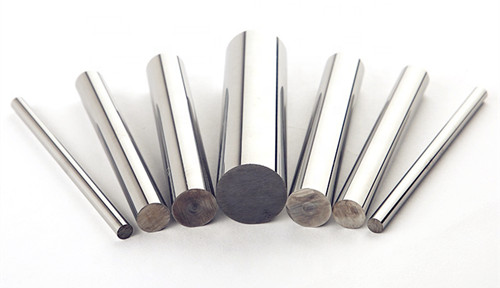
V. Model Comparison (vs. YG6X and Similar carbides)
The core differences between C3 carbide and YG6X—as well as other similar alloys—center on hardness, wear resistance, and toughness. A detailed comparison is provided below:
- C3Vs. C2 Carbide:C2 is a medium-grained alloy with a cobalt content of approximately 8%. It offers lower wear resistance than C3 carbide but possesses superior impact toughness. C2 is suitable for medium-load machining applications, whereas C3 carbide is designed for scenarios requiring high precision and high wear resistance.
- C3 Vs. YG6X: Both are ISO K10-class extra fine grained alloys, with essentially comparable levels of hardness and wear resistance. C3 carbide features a slightly higher cobalt (Co) content, resulting in superior bending strength and impact toughness. YG6X possesses a finer grain structure, yielding a superior surface finish during machining; while the two are mutually interchangeable, C3 carbide is better aligned with U.S. industrial equipment standards.
- C3 Vs. YG6:YG6 is a medium-grained alloy (1–2 μm) with a hardness of approximately 89 HRA. It offers superior impact toughness but exhibits lower wear resistance compared to C3 carbide. YG6 is suitable for semi-finishing and rough machining applications, whereas C3 carbide is designed for fine finishing and high-speed cutting.
- C3Vs. YG8: YG8 features an 8% cobalt content and a medium-grained structure. It offers superior impact toughness but lower wear resistance. YG8 is suitable for heavy-duty rough machining, while C3 carbide is ideal for high-wear-resistance, high-precision fine finishing.
VI. Usage Precautions
- Due to its slightly lower impact toughness, avoid using this material in heavy-load or severe interrupted cutting operations to prevent chipping or tool breakage; the usage restrictions are identical to those for YG6X.
- During machining, cutting speeds and feed rates must be carefully controlled to accommodate the material’s high hardness characteristics. This prevents excessive cutting forces from damaging the tool or mold; it is recommended to adjust these parameters based on the specific material being machined.
- When integrating this material into U.S. industrial equipment systems, it is essential to adjust product dimensions and tolerances in accordance with the equipment’s specifications to ensure a proper fit, thereby fully leveraging the material’s advantages in high wear resistance and high precision.
Our company is among China’s top ten tungsten carbide manufacturers. Should you require cemented carbide products, please contact us.