
C2 Carbide
I. Definition and Standard Classification of C2 Carbide
From a standard system perspective, C2 belongs to the ANSI (American Standard) classification, corresponding to the K category in the ISO system. Its equivalent ISO grade is usually around K20, close to the Chinese YG6 grade. C2 carbide is an alloy material made by powder metallurgy, using tungsten carbide (WC) as the hard phase and cobalt (Co) as the binder phase. A typical composition is 94% WC and 6% Co. Its core physical and mechanical properties are: density approximately 14.6-15.0 g/cm³, hardness reaching 90-92 HRA, and high wear resistance, bending strength (≥350 Ksi), and high-temperature stability, maintaining stable performance below 800℃. Its core characteristic is the emphasis on a balance between wear resistance and toughness, making it suitable for various industrial applications.
| WC | Co | Grain size (μm) | Hardness(HRA) | Density(g/cm³) | TRS (N/mm²) |
| 94% | 6% | 0.8-1.6 | 91.5-92.5 | 14.8-15.0 | 2200-2760 |
II. Core Advantages and Manufacturing Process of C2 tungsten Carbide
The core advantages of C2 cemented carbide stem from its scientifically proportioned composition and precise powder metallurgy manufacturing process. This is also the key to its differentiation from other cemented carbide grades and its wide application across multiple industries. In terms of composition, 94% tungsten carbide (WC), as the hard phase, is the core determining its high hardness and wear resistance. Its hardness is close to that of diamond, effectively resisting wear and cutting losses during various material processing. 6% cobalt (Co), as the binder phase, acts like an “adhesive,” tightly binding the hard tungsten carbide particles. This not only compensates for the inherent brittleness of WC but also endows C2 alloy with good bending strength and toughness, making it less prone to fracture under impact loads. This achieves a precise balance between wear resistance and toughness, unlike high-cobalt content (such as YG8, K30) which emphasizes toughness and low-cobalt content (such as YG3, K10) which emphasizes hardness.
Its manufacturing process requires multiple precise steps, including batching, mixing, pressing, and sintering. Each step directly affects the performance of the final product. First, high-purity WC powder and Co powder are mixed in a specific ratio. After adding a special binder, the mixture is thoroughly ground using a ball mill to ensure uniform dispersion of the two powders. Then, the mixture is placed in a mold and press-formed under high pressure to obtain a green blank. Finally, the green blank is sintered in an inert gas sintering furnace at 1300-1500℃, causing the Co binder phase to melt and firmly bond the WC particles, forming a dense and stable finished product. This process allows for precise control of the component ratio, avoiding impurities and ensuring stable performance indicators to meet the stringent requirements of industrial production.
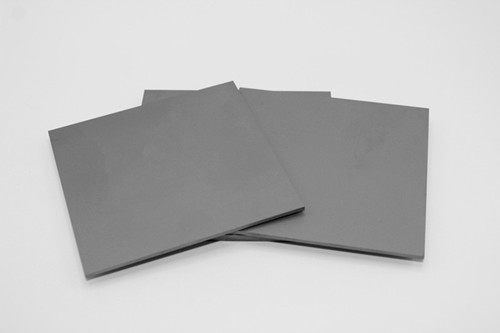
III. Main Applications of C2 Carbide
C2 carbide has a wide range of applications, covering multiple core industrial fields such as machining, cold stamping dies, and mining. Specific applications are as follows:
1. Machining: C2 cutting tools can machine non-metallic materials such as graphite, plastics, and wood, as well as metallic materials such as cast iron, magnesium alloys, and aluminum alloys. Its high hardness enables smooth cutting and reduces burrs. Its excellent wear resistance allows for continuous machining for extended periods without frequent tool changes. Suitable for low-to-medium speed cutting and semi-finishing, it is widely used in mass production fields such as automotive parts and agricultural machinery. Compared to high-speed steel tools, its service life can be increased by 3-5 times, effectively reducing production costs for enterprises.
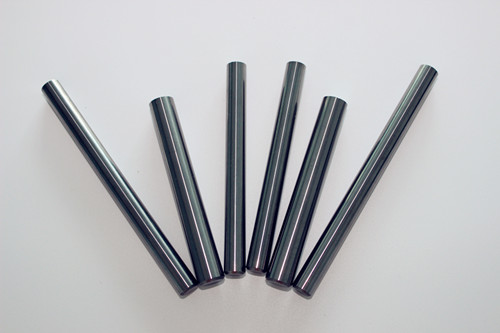
2. Cold stamping die field: Due to its balance of hardness and toughness, C2 is suitable for manufacturing small to medium-sized cold stamping dies, punches, dies, and other critical components. In cold stamping, dies must withstand repeated impacts and friction. C2’s high hardness resists wear and maintains shape accuracy. Its bending strength of ≥350Ksi can withstand impacts, preventing chipping and breakage. It is mainly used for stamping low-carbon steel plates, non-ferrous metal sheets, and plastic sheets, such as electronic component housings and hardware accessories. Compared to traditional die steels, its service life can be increased by 2-4 times, ensuring the precision of stamped parts.
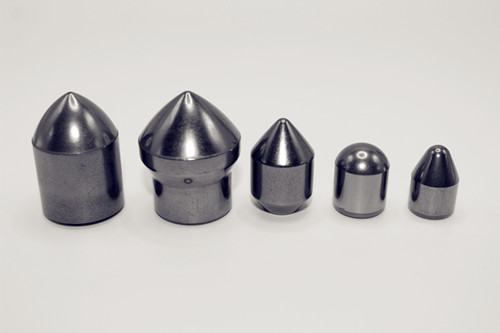
3. Mining Industry: As a core material for wear-resistant parts in mining, C2 can be used to manufacture rock drill teeth, coal mine cutting teeth, mining belt scrapers, crusher liners, etc. The harsh mining environment requires parts to withstand high-intensity wear, impact, and corrosion. C2’s wear resistance and impact resistance can extend the service life of parts by more than three times, reducing equipment maintenance costs and downtime, and improving mining efficiency.
4. Other Industrial Fields: In the machinery manufacturing industry, it can be used to manufacture wear-resistant bushings, bearings, seals, etc., suitable for high-speed, high-pressure, and high-wear conditions, extending equipment life. In the electronics industry, it can be used to manufacture precision cutting tools for machining metal contacts of electronic components, circuit boards, etc., ensuring machining quality. In the medical device industry, it can be used to manufacture the cutting edges of surgical instruments such as orthopedic scalpels, ensuring sharpness and service life due to its high hardness and corrosion resistance.
IV. Comparison of C2 tungsten carbide with Similar Grades and Development Trends
Compared with similar grades, C2 hard alloy has significant performance advantages. Compared to the Chinese YG6 grade, C2 has similar composition and properties, but it exhibits superior high-temperature stability. Compared to the ISO K20 grade, C2 demonstrates better bending strength and toughness. It offers better wear resistance than high-cobalt-content grades and stronger toughness than low-cobalt-content grades, while also offering high cost-effectiveness. Its production cost is lower than that of high-end precision cemented carbides, meeting the needs of most industrial applications and making it one of the most widely used cemented carbide grades.
With the continuous development of industrial technology, the application scenarios of C2 cemented carbide are constantly expanding, and its manufacturing process is continuously being optimized. Currently, by using ultrafine WC powder and optimizing sintering parameters, its hardness and toughness can be further improved. The application of surface coating technologies (such as TiN and TiC coatings) can enhance the wear resistance and anti-adhesion properties of cutting tools. In the future, as the manufacturing industry develops towards high-end, precision, and green technologies, C2 will play a more important role in fields such as new energy, aerospace, and high-end equipment manufacturing, and its performance will continue to be upgraded to meet industrial demands.
Our company is among China’s top ten cemented carbide manufacturers. Should you require cemented carbide products, please contact us.