
Tungsten carbide recycling process and practical points
Tungsten carbide, as the core component of cemented carbide, is widely used in cutting tools, molds, mining machinery parts, and other fields due to its high hardness, high temperature resistance, and wear resistance. With industrial development, a large amount of discarded cemented carbide products generate substantial tungsten carbide waste. This waste contains abundant strategic metal tungsten. Tungsten’s natural reserves are limited and mining is difficult. Tungsten carbide recycling not only reduces enterprise costs but also achieves resource recycling, aligning with the concept of green industry. Since the sharp rise in tungsten carbide prices in 2025, tungsten carbide recycling has become increasingly important. The following section, combining mainstream technologies, details the methods, practical procedures, and precautions for recycling tungsten carbide waste, tailored to actual production scenarios and designed for easy understanding.
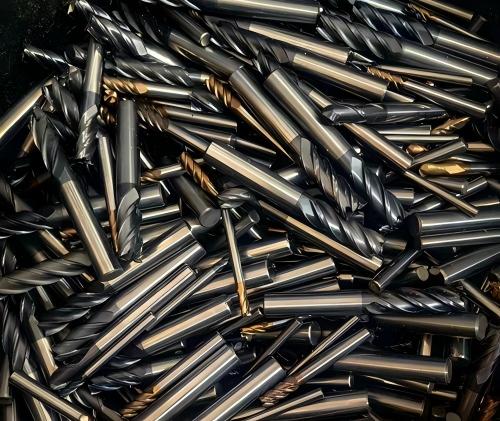
The tungsten carbide waste we encounter daily mainly consists of discarded cemented carbide cutting tools, molds, etc., with tungsten carbide (WC) as its core component, often containing cobalt, nickel, and other binder phases, as well as small amounts of impurities. Different waste materials, depending on their state and composition, require different recycling methods. Currently, the industry mainly categorizes them into two types: traditional pyrometallurgical recycling and modern low-consumption, environmentally friendly recycling.
I. Traditional Pyrometallurgical Recycling: Suitable for Large, High-Purity Waste Materials
Pyrometallurgical recycling is the earliest applied tungsten carbide recycling technology. The process is mature and particularly suitable for processing large, uncrushed waste materials. The core methods are alkaline fusion and sodium nitrate smelting.
1.Alkaline Fusion: Also Considers By-product Recovery
Alkaline fusion is the mainstream method for industrial processing of large tungsten carbide waste. The core process involves high-temperature roasting, causing tungsten carbide to react with alkaline reagents to produce water-soluble sodium tungstate, which is then purified and reduced back to tungsten carbide powder. Practical Procedure: 1. Simplified Method:After crushing the waste material, add 5%-10% sodium carbonate and 25%-50% sodium chloride (for fluxing and energy saving) in a specific ratio. Mix thoroughly and calcine at 700-900℃ for 2-5 hours. After cooling, soak in water and filter to obtain a sodium tungstate solution. The residue can be used to recover metals such as cobalt and nickel. Finally, purify, acidify, and reduce the solution to obtain high-purity tungsten carbide powder. Its advantages are simple process and the ability to recover byproducts such as tantalum and niobium. Its disadvantages are high energy consumption and the need for supporting waste gas treatment equipment.
- Sodium Nitrate Smelting Method:Suitable for large-scale recycling. This method is a continuous production process suitable for large-scale processing of cemented carbide blocks. Sodium nitrate is used as an oxidant and flux to smelt and decompose tungsten carbide at high temperatures. Practical Procedure: After melting sodium nitrate in an iron pot, continuously add cemented carbide blocks and excess sodium nitrate, controlling the reaction temperature at approximately 1000℃. After cooling the melt, dissolve in water, filter to remove impurities, and then purify the sodium tungstate solution through acid decomposition, finally reducing it to tungsten carbide powder. Technological Innovation: Heating the sintered waste to 2000℃ and crushing it before feeding it into the system can reduce the amount of sodium nitrate used. Its disadvantages are high energy consumption and the corrosiveness of sodium nitrate, requiring proper protection.
II. Modern Recycling Technologies: Low Energy Consumption and Environmentally Friendly, Adapting to Refined Recycling Needs
With increasingly stringent environmental requirements, low-energy and environmentally friendly modern technologies have emerged, mainly including zinc smelting, electrochemical methods, and reheating methods, suitable for the refined recycling of small to medium-sized, low-impurity waste.
- Zinc Smelting Method: High Recovery Rate and Wide Application
The zinc smelting method is currently the most commonly used modern method. It utilizes the high affinity of zinc with binder phases such as cobalt and nickel to break down the hard alloy structure and achieve separation. Practical Process: Melt zinc at 450-500℃, immerse the crushed waste in the zinc liquid, and the zinc combines with the binder to form an alloy; after cooling and crushing, reheat, and the zinc volatilizes, condenses, and is recovered (recyclable). The remainder is high-purity tungsten carbide powder. Its advantages are low energy consumption, environmental friendliness, and high powder purity. Its disadvantage is that it is only suitable for waste containing cobalt and nickel binder phases.
- Electrochemical Method: Suitable for High-Precision Recycling
This method is suitable for high-precision, small-batch waste recycling, utilizing electrochemical action to selectively dissolve the binder phase. Practical procedure: Prepare the electrolyte according to the type of binder phase, place the waste as the anode in the electrolyte, control the current and voltage to dissolve the binder phase into the electrolyte, while the tungsten carbide remains in a solid state; remove the solid, wash and dry it to obtain a high-purity powder. The electrolyte can recover cobalt and nickel. Its advantages are high purity and environmental friendliness. Its disadvantages are complex process, low processing efficiency, and unsuitability for large-scale recycling. - Reheating Method: Emerging Low-Consumption Technology
This method is an emerging physicochemical combination technology, suitable for waste with binder phases of low-melting-point metals such as copper and silver. In a non-oxidizing atmosphere such as nitrogen or argon, the waste is heated to above the melting point of the binder phase (800-1200℃) to melt it. After cooling and crushing, the residual binder phase is leached out with dilute acid, filtered, washed, and dried to obtain pure tungsten carbide powder. Its advantages are low energy consumption, environmental friendliness, and simple process. Its disadvantages are immature technology, limited compatibility with different types of waste, and limited large-scale application.
III. Key Points and Precautions for Recycling Regardless of the method used
The following points must be noted to improve efficiency, ensure purity, reduce costs, and minimize pollution.
- Proper Waste Pre-treatment Before recycling, the waste needs to be crushed, sorted, and cleaned: crushing ensures uniform particle size and sufficient reaction; sorting removes impurities such as steel and plastic to avoid affecting purity and damaging equipment; cleaning removes oil and dust to prevent the generation of harmful gases.
- Precise Control of Process Parameters: Temperature and reagent dosage directly affect the recovery effect. For the alkaline fusion method, the roasting temperature is 700-900℃, and the ratio of sodium carbonate to sodium chloride needs to be precise. For the sodium nitrate smelting method, excess sodium nitrate must be maintained to ensure complete decomposition of tungsten carbide.
- Emphasis on Environmental Protection: Tungsten-containing wastewater should be treated to meet standards using methods such as chemical precipitation and ion exchange. Acidic gases and dust generated at high temperatures require absorption and collection equipment, with the possibility of heat recovery. Residue should be comprehensively utilized, and hazardous waste should be disposed of according to standards.
- Achieving Comprehensive Resource Utilization: Co-recovering metals such as cobalt, nickel, tantalum, and niobium from waste materials, such as recovering tantalum and niobium using the alkaline fusion method and recovering zinc using the zinc fusion method for recycling, can increase revenue and reduce resource waste.
IV.Global Major Tungsten Carbide Recycling Companies
Global major tungsten carbide recycling players are led by established international groups. Sandvik (Sweden) operates a mature closed‑loop system with 12 global recycling hubs, handling ~20,000 tons/year and delivering WC powder at 99.95% purity. H.C. Starck (Germany, Mitsubishi Materials) is a pure‑play tungsten recycler achieving 99.99% purity, qualified for aerospace and defense applications. Kennametal (USA) specializes in aerospace‑grade carbide and high‑value scrap using advanced separation technologies. Mitsubishi Materials and Sumitomo Electric (Japan) deploy proprietary dissolution and zinc‑reclaim processes with strict quality control and strong Asia‑Pacific coverage. Ceratizit (Europe) excels in integrated manufacturing and industrial scrap processing, while Hyperion Materials & Technologies provides independent high‑end recycling with metallurgical performance matching virgin materials
V. Recycling Trends and Summary
Future tungsten carbide recycling will develop towards greening, refinement, and large-scale operations. This will involve developing low-temperature processes and recycling reagent systems, exploring biotechnology applications, strengthening intelligent control, achieving multi-metal synergistic recycling and high-value-added product development, and establishing a complete recycling industry chain.
In summary, tungsten carbide waste recycling is an effective way to alleviate the shortage of tungsten resources and promote green development for enterprises. In actual production, appropriate processes should be selected based on the waste situation, production scale, environmental protection requirements, and cost budget. By doing a good job in pretreatment, parameter control, and environmental protection treatment, efficient, environmentally friendly, and economical recycling can be achieved, turning “waste” into “treasure”.
Our company is among China’s top ten cemented carbide manufacturers. Should you require cemented carbide products, please contact us.