
Tungsten carbide cobalt
Tungsten carbide cobalt cemented carbide is a composite material with tungsten carbide as the hard phase and cobalt as the binder phase. It is classified into three categories based on cobalt content: high cobalt (20%-30%), medium cobalt (10%-15%), and low cobalt (3%-8%). Typical grades produced in China include YG2, YG3, YG3X, YG6, YG8, etc., where “YG” represents “WC-Co,” the suffix number indicates the percentage of cobalt content, and “X” and “C” represent fine-grained and coarse-grained structures, respectively. This material possesses high hardness and bending strength, and is widely used in the manufacture of cutting tools, dies, cobalt tools, and wear-resistant parts. It is extensively applied in military, aerospace, mechanical processing, metallurgy, oil drilling, mining tools, electronic communications, construction, and other fields. With the development of downstream industries, the market demand for cemented carbide is continuously increasing. Furthermore, the future development of high-tech weapons and equipment manufacturing, advancements in cutting-edge science and technology, and the rapid development of nuclear energy will significantly increase the demand for high-tech and high-quality stable cemented carbide products.
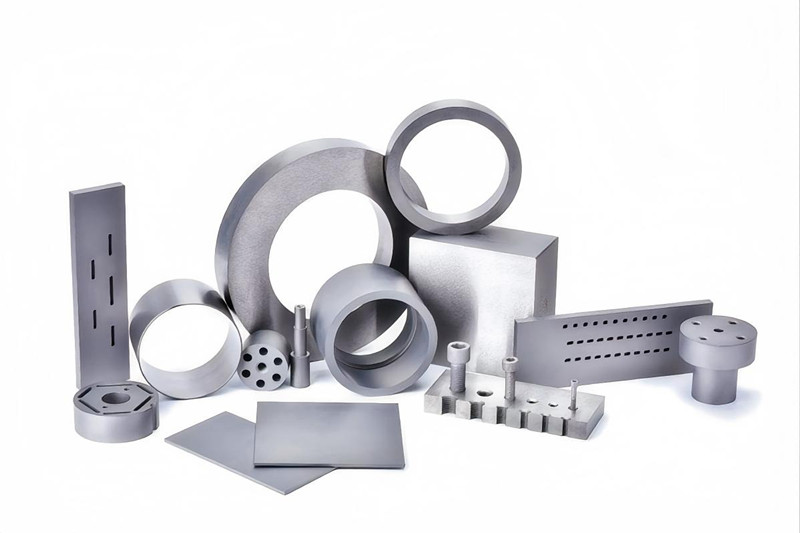
I. Introduction of tungsten carbide cobalt:
The letters “YG” represent “WC-Co,” the number after “G” indicates the cobalt content, “X” indicates fine-grained structure, and “C” indicates coarse-grained structure. The bending strength and fracture toughness of this type of cermet generally increase with increasing cobalt content, while the hardness decreases. Tungsten-cobalt alloy has a high elastic modulus and a small coefficient of thermal expansion, making it the most widely used type of cemented carbide.
1.Hardness Testing Method:
The hardness of tungsten-cobalt alloy is mainly tested using a Rockwell hardness tester, measuring the HRA hardness value. The PHR series portable Rockwell hardness tester is very suitable for testing the hardness of tungsten-cobalt alloys. The instrument has the same weight and accuracy as a desktop Rockwell hardness tester, and is very convenient to use and carry.
Tungsten-cobalt alloy is a metal, and hardness testing can reflect the differences in mechanical properties of tungsten-cobalt alloy materials under different chemical compositions, microstructure, and heat treatment processes. Therefore, hardness testing is widely used in the inspection of tungsten-cobalt alloy properties, supervision of the correctness of heat treatment processes, and research of new materials.
2.Applications
Tungsten-cobalt alloys are used as cutting tools for machining cast iron, non-ferrous metals, non-metallic materials, heat-resistant alloys, titanium alloys, and stainless steel. They are also used in drawing dies, wear-resistant parts, stamping dies, and drill bits.
This alloy, with tungsten and cobalt as its main components, is widely used in the manufacture of drill bits for mining. [1] Its cobalt content is usually between 3% and 25%. The higher the cobalt content, the better the toughness of the alloy, but the hardness and wear resistance decrease accordingly; conversely, a lower cobalt content results in higher hardness and greater brittleness. In practical applications, a balance must be struck based on working conditions. For example, high-cobalt grades are preferred for rough machining to resist impact, while low-cobalt, high-hardness grades are preferred for finish machining to ensure surface quality and dimensional accuracy.
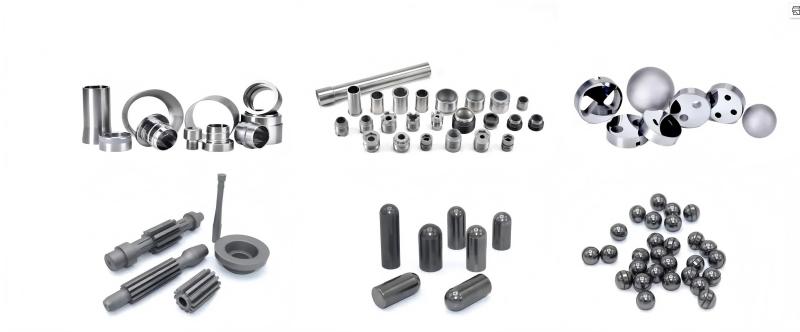
II.Physical Properties tungsten carbide cobalt:
Tungsten carbide cobalt alloy, as one of the commonly used grades of cemented carbide, has the following main physical properties:
1.Coercive Force
The coercive force of tungsten carbide cobalt alloy is due to the fact that the binder phase in the cemented carbide is a ferromagnetic substance, which gives the alloy a certain magnetism. The coercive force can be used to control the microstructure of the alloy and is an internal control indicator for tungsten steel manufacturers. The coercive force of tungsten carbide cobalt alloy is mainly related to the cobalt content and its dispersion. It increases with decreasing cobalt content. When the cobalt content is constant, the degree of dispersion of the cobalt phase increases with the refinement of tungsten carbide grains, so the coercive force also increases. Conversely, the coercive force decreases. Therefore, under the same conditions, the coercive force can be used as an indirect parameter to measure the size of tungsten carbide grains in the alloy: in alloys with normal microstructure, as the carbon content decreases, the tungsten content in the cobalt phase increases, which strengthens the cobalt phase, and the coercive force increases accordingly. Therefore, the faster the cooling rate during sintering, the greater the coercive force.
2.Magnetic Saturation
In a magnetic field, as the applied magnetic field increases, the magnetic induction intensity of the alloy also increases. When the magnetic field strength reaches a certain value, the magnetic induction intensity no longer increases, meaning the alloy has reached magnetic saturation. The magnetic saturation value of the alloy is only related to the cobalt content of the alloy, and not to the grain size of the tungsten carbide phase in the alloy. Therefore, magnetic saturation can be used for non-destructive compositional inspection of alloys, or to identify the presence of a non-magnetic ηl phase in alloys of known composition.
3.Elastic Modulus
Due to the high elastic modulus of tungsten carbide, tungsten carbide cobalt alloys also have a high elastic modulus. The elastic modulus decreases with increasing cobalt content in the alloy; the grain size of tungsten carbide in the alloy has no significant effect on the elastic modulus. The elastic modulus of the alloy decreases with increasing operating temperature.
4.Thermal Conductivity
To prevent tool damage due to overheating during use, it is generally desirable for the alloy to have high thermal conductivity. WC-Co alloys have high thermal conductivity, approximately 0.14-0.21 cal/cm·°C·s. Thermal conductivity is generally only related to the cobalt content of the alloy, increasing as the cobalt content decreases.
5.Coefficient of Thermal Expansion
The linear expansion coefficient of tungsten carbide cobalt alloys increases with increasing cobalt content. However, the expansion coefficient of the alloy is much lower than that of steel, which causes significant welding stress during the brazing of alloy tools. If slow cooling measures are not taken, it often leads to alloy cracking. This is even more pronounced for low-strength alloys.
6.Hardness
Hardness is a major mechanical property indicator of cemented carbide. As the cobalt content in the alloy increases or the carbide grain size increases, the hardness of the alloy decreases. For example, when the cobalt content of industrial WC-CO alloys increases from 2% to 25%, the hardness HRA of the alloy decreases from 93 to about 86. For every 3% increase in cobalt, the alloy hardness decreases by approximately 1 degree. Refining the tungsten carbide grain size can effectively improve the hardness of the alloy.
7.Bending Strength
Like hardness, bending strength is a major property of cemented carbide. The factors affecting the bending strength of the alloy are numerous and complex. All factors affecting the composition, structure, and sample state of the alloy can lead to changes in the bending strength value. Generally, the bending strength of the alloy increases with increasing cobalt content. However, after the cobalt content exceeds 25%, the bending strength decreases with increasing cobalt content. For industrially produced WC-Co alloys, in the 0-25% cobalt content range, the bending strength of the alloy always increases with increasing cobalt content. Compressive
8.Strength
The compressive strength of cemented carbide indicates its ability to resist compressive loads. The compressive strength of WC-Co alloys decreases with increasing cobalt content and increases with finer tungsten carbide grain size. Therefore, fine-grained alloys with lower cobalt content have higher compressive strength.
9.Impact Toughness
Impact toughness is an important technical indicator for mining alloys and is also of practical significance for cutting tools used in demanding intermittent cutting conditions. The impact toughness of WC-Co alloys increases with increasing cobalt content and with increasing tungsten carbide grain size. Therefore, most mining alloys are coarse-grained alloys with higher cobalt content, such as YG11C, YG8C, etc.
Of course, the relevant physical properties of cemented carbides are not limited to these aspects; the characteristics exhibited by materials with different formulations chosen for specific applications will also vary.
Our company is among China’s top ten tungsten carbide cobalt products manufacturers. Should you require cemented carbide products, please contact us.