
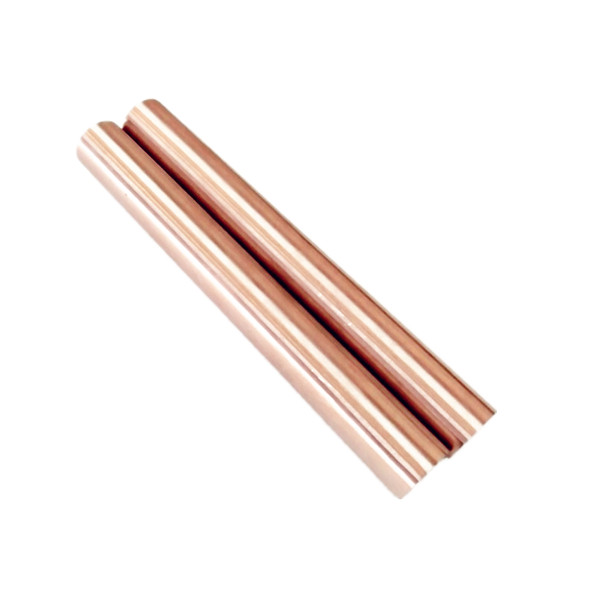
Copper tungsten rod grades:
|
Composition-based designation |
Grade |
Chemical composition% | Mechanical property | ||||||
| Cu | Impurity ≤ |
W | Density | Hardness | Resistivity | Conductivity | TRS | ||
| g/cm3 | HB | μΩ·cm | IACS/% | Mpa | |||||
| WCu (W50/Cu50) |
CuW50 | 50±2.0 | 0.5 | Bal. | 11.85 | 115 | 3.2 | 54 | 580 |
| WCu (W55/Cu45) |
CuW55 | 45±2.0 | 0.5 | Bal. | 12.3 | 125 | 3.5 | 49 | 630 |
| WCu (W60/Cu40) |
CuW60 | 40±2.0 | 0.5 | Bal. | 12.75 | 140 | 3.7 | 47 | 680 |
| WCu (W65/Cu35) |
CuW65 | 35±2.0 | 0.5 | Bal. | 13.3 | 155 | 3.9 | 44 | 730 |
| WCu (W70/Cu30) |
CuW70 | 30±2.0 | 0.5 | Bal. | 13.8 | 175 | 4.1 | 42 | 790 |
| Wcu (W75/Cu25) |
CuW75 | 25±2.0 | 0.5 | Bal. | 14.5 | 195 | 4.5 | 38 | 885 |
| WCu (W80/Cu20) |
CuW80 | 20±2.0 | 0.5 | Bal. | 15.15 | 220 | 5 | 34 | 980 |
| WCu (W85/Cu15) |
CuW85 | 15±2.0 | 0.5 | Bal. | 15.9 | 240 | 5.7 | 30 | 1080 |
| WCu (W90/Cu10) |
CuW90 | 10±2.0 | 0.5 | Bal. | 16.75 | 260 | 6.5 | 27 | 1160 |
Sizes of copper tungsten rods:
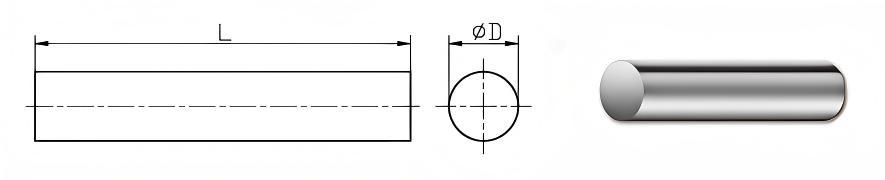
| OD(mm) | Length(mm) | Customized service |
| 0.5-120 | 3-1000 | Accepted |
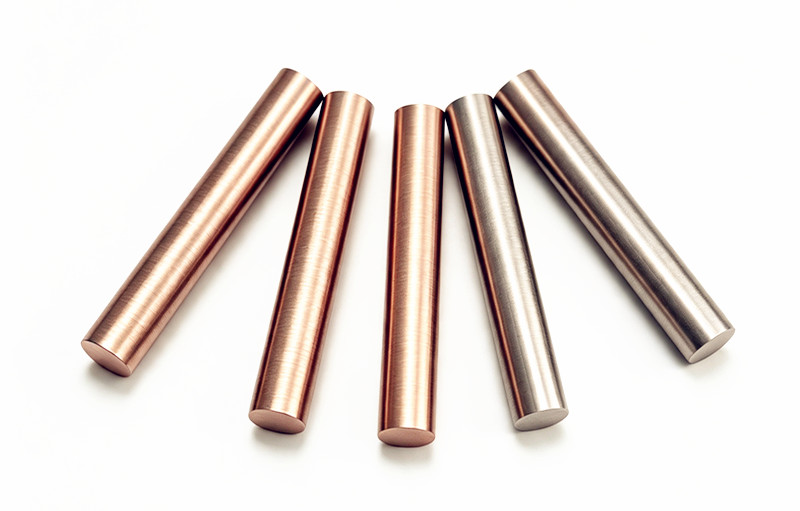
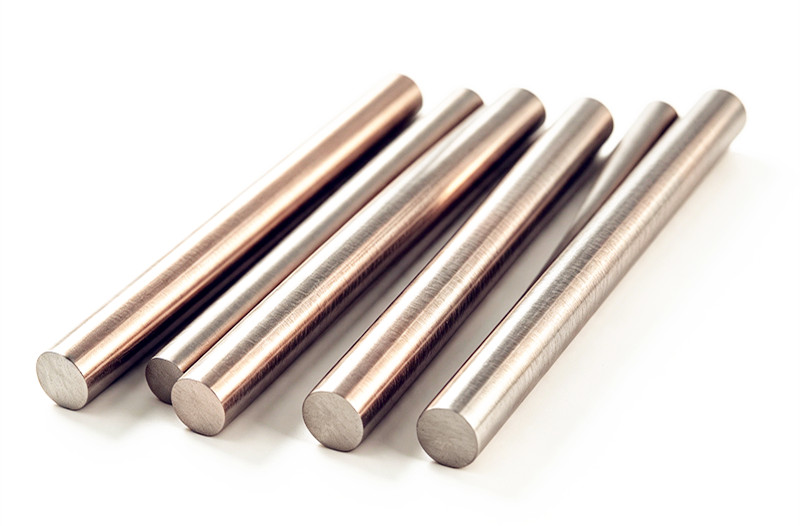
Tungsten copper rod details:
FAQ for copper tungsten rods:
Q1: What are copper tungsten round rods mainly used for?
A: Copper tungsten round rods are widely used for EDM electrodes, resistance welding electrodes, high-voltage vacuum electrical contacts, heat sinks and vacuum aerospace components, featuring excellent arc erosion resistance, high thermal & electrical conductivity and low thermal expansion.
Q2: What are the common grades and how to select the right grade?
A: Common grades: WCu50, WCu60, WCu65, WCu70, WCu75, WCu80. Higher tungsten content brings better arc resistance and higher hardness; higher copper content means better conductivity and easier machining. W70Cu30, W75Cu25 and W80Cu20 are popular choices for EDM and welding electrodes.
Q3: What manufacturing process do you use for copper tungsten rods?
A: The primary process is tungsten skeleton sintering followed by copper infiltration. This method yields low porosity and consistent density, ideal for electrodes and electrical contacts. Direct powder sintering is offered for cost-sensitive projects.
Q4: What is the difference between copper tungsten rod, tungsten carbide rod and Stellite rod?
A: Copper tungsten is engineered for arc resistance and conductivity for electrodes and contacts. Tungsten carbide delivers high hardness and superior wear resistance. Stellite performs well at high temperatures with excellent corrosion and abrasion resistance.
Q5: Will copper tungsten oxidize or tarnish?
A: The copper phase may oxidize and tarnish (discolor) in humid air. This surface discoloration will not affect core performance. Store in dry, sealed conditions; anti-tarnish surface treatment is optional.
Q6: Can you supply finished machined parts with threads, holes and steps?
A: Yes, we provide full CNC machining service. We can fabricate custom electrodes and contact parts according to your drawings.
Q7: What’s your MOQ for standard / custom copper tungsten rods?
A: Standard stock sizes: small MOQ, sample order acceptable (1–2 pcs for testing). Non-standard customized shapes require higher MOQ to cover mold & sintering cost.
Q8: What’s your production lead time?
A: Stock ground plates: 2–3 working days.
Standard custom carbide plates: 10–25 days.
Please send us inquiries for quotations and free samples for testing: