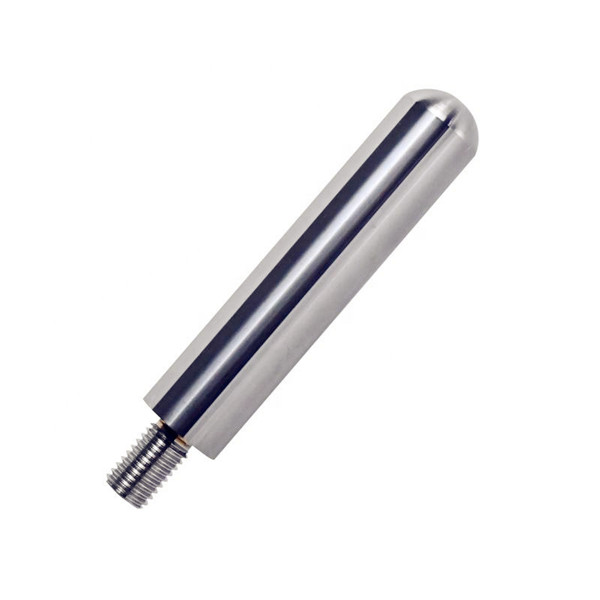
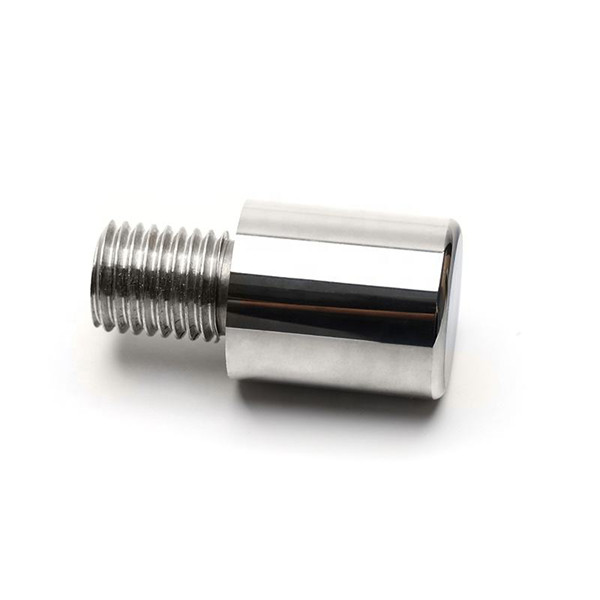
Grade of tungsten carbide pegs :
| Grades | Density (g/cm³) |
Hardness (HRA) |
T.RS (N/mm²) |
Main Application |
| YG8 | 14.80 | 89.5 | 2060 | High hardness, high toughness, mainly used for roller press rollers, suitable for horizontal bead mills and sand mills. |
| YG10 | 14.60 | 88.5 | 2850 | High hardness, high toughness, mainly used for roller press rollers, suitable for horizontal bead mills and sand mills. |
| YN10 | 14.45 | 90.5 | 2350 | Non-magnetic tungsten carbide grade. Suitable for non-magnetic working environments. |
Tungsten carbide peg sizes:
| OD(mm) | L(mm) | TAPS |
| 10 | 35 | M12 |
| 12 | 35 | M10 |
| 14 | 58 | M12 |
| 16 | 48 | M12 |
| 30 | 108 | M16 |
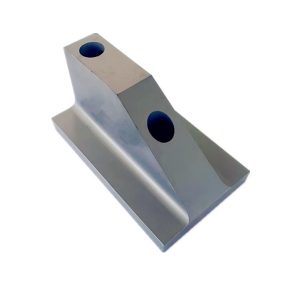
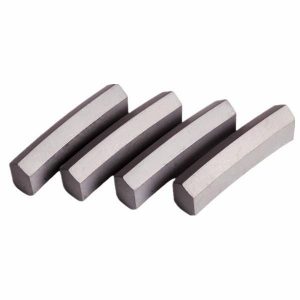
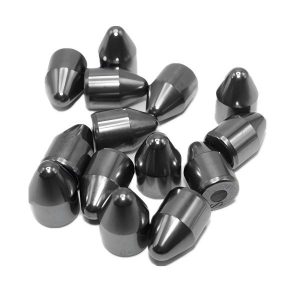
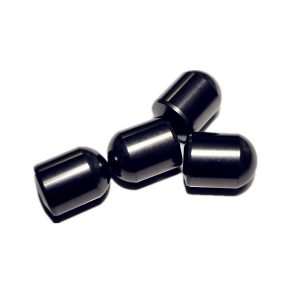
Tungsten carbide peg details:
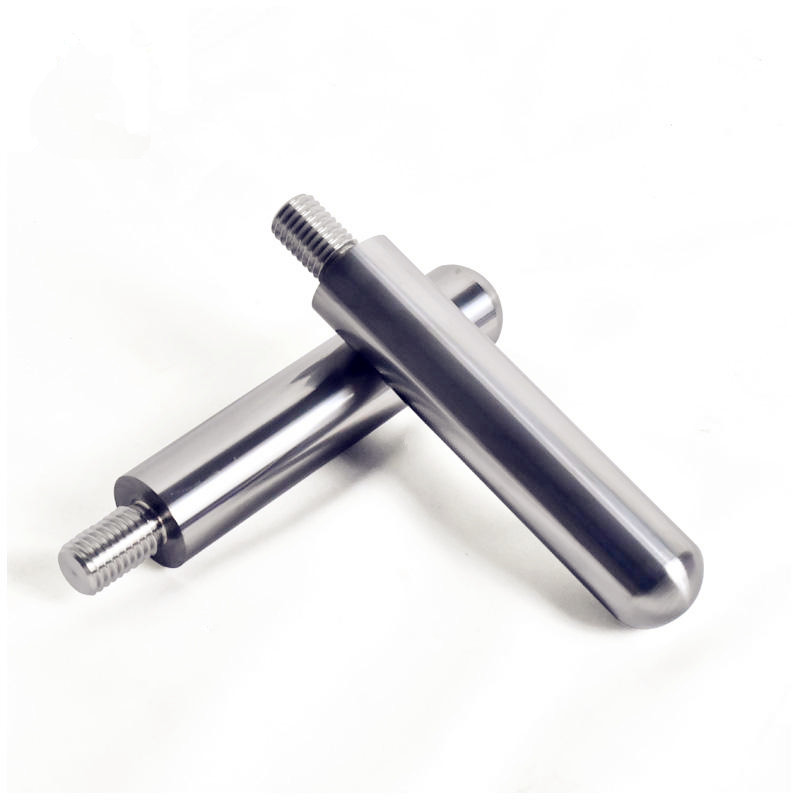
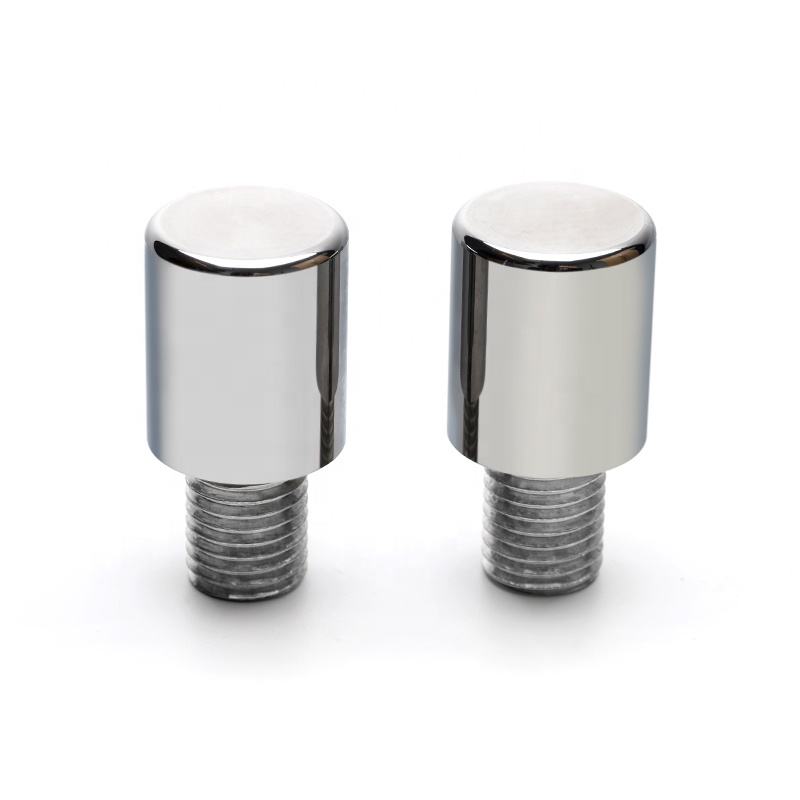
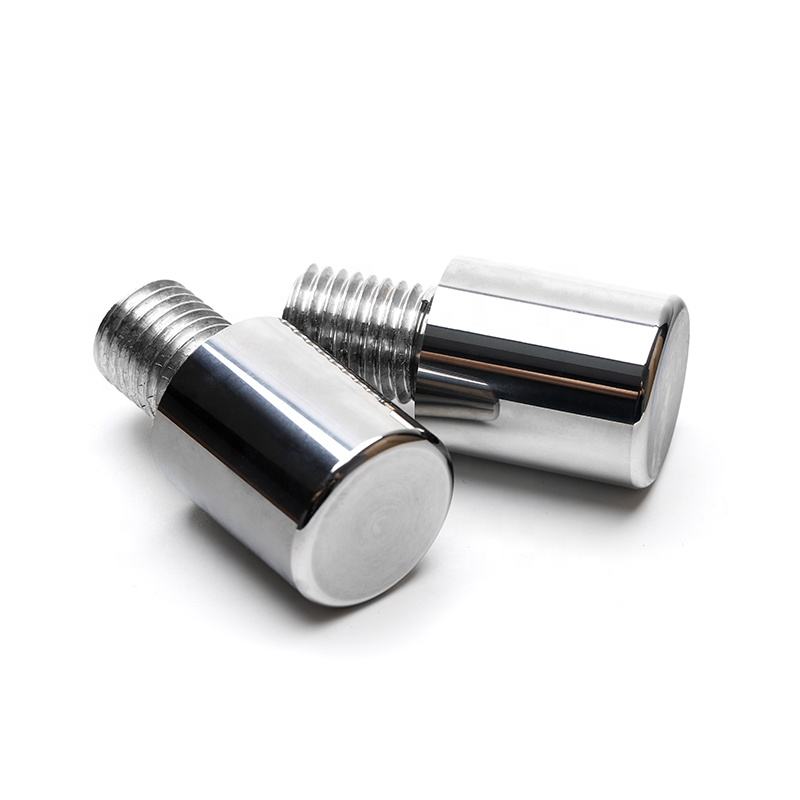
FAQ for tungsten carbide pegs:
Q1: What are tungsten carbide pegs?
A: Tungsten carbide pegs (also known as carbide stirring pins or grinding pins) are wear-resistant agitator components mounted on the rotor of horizontal bead mills / sand mills. They agitate grinding media and disperse pigments, inks, coatings, and slurries. We supply both solid integral carbide pegs and brazed pegs (carbide head + steel shank).
Q2: What is the difference between integral solid carbide pegs and brazed pegs?
A: (1) Integral solid carbide pegs: Entirely tungsten carbide, no braze seam – thus zero risk of head detachment (though extreme shock may cause brittle fracture). Offers the longest service life due to the entire peg body being wear-resistant, providing significantly more usable wear length. Higher cost, requires careful thread anti-seize during maintenance.
(2) Brazed pegs: Tungsten carbide head brazed onto a steel (often carbon steel) threaded shank. Cost-effective, with tough steel threads that are easy to remove. The steel shank absorbs impact well, but under thermal/mechanical fatigue or extreme impact, the braze joint may crack or the head may detach.
Recommendation: Brazed pegs are the industry standard for general sand mill applications. For high-output, premium long-life operations where downtime is expensive, solid integral pegs are the superior choice.
Q3: What dimensional tolerance can you achieve?
A: Outer diameter tolerance of ±0.002 to ±0.01 mm. Threads follow standard metric tolerances. All finished pegs are precision ground.
Q4: How long is the service life compared with steel pegs?
A: Tungsten carbide pegs typically last 5–12 times longer than hardened steel pegs, significantly reducing machine downtime and replacement frequency. Actual lifespan depends on grinding media type, slurry abrasiveness, and rotation speed.
Q5: How do you control quality before delivery?
A: Each batch is subject to a comprehensive outgoing inspection that includes the following 11 items: chemical composition (WC and Co content), density, coercive force, transverse rupture strength, metallographic structure (grain size and binder phase distribution), porosity rating, dimensional and thread geometry, concentricity/run‑out (especially critical for brazed pegs), hardness (HRA), surface condition (freedom from cracks, pores, and burrs), and braze joint integrity (for brazed types only). Through these strict inspections, we ensure that no non‑conforming products are ever shipped out.
Q6: What’s the minimum order quantity (MOQ)?
A: Standard stock sizes normally require 5kg MOQ. Non-standard customized shapes require higher MOQ to cover mold & sintering cost.
Q7: What’s your production lead time?
A: Stock carbide pegs: 2–3 working days.
Standard carbide pegs: 10–25 days.
Please send us inquiries for quotations and free samples for testing: